
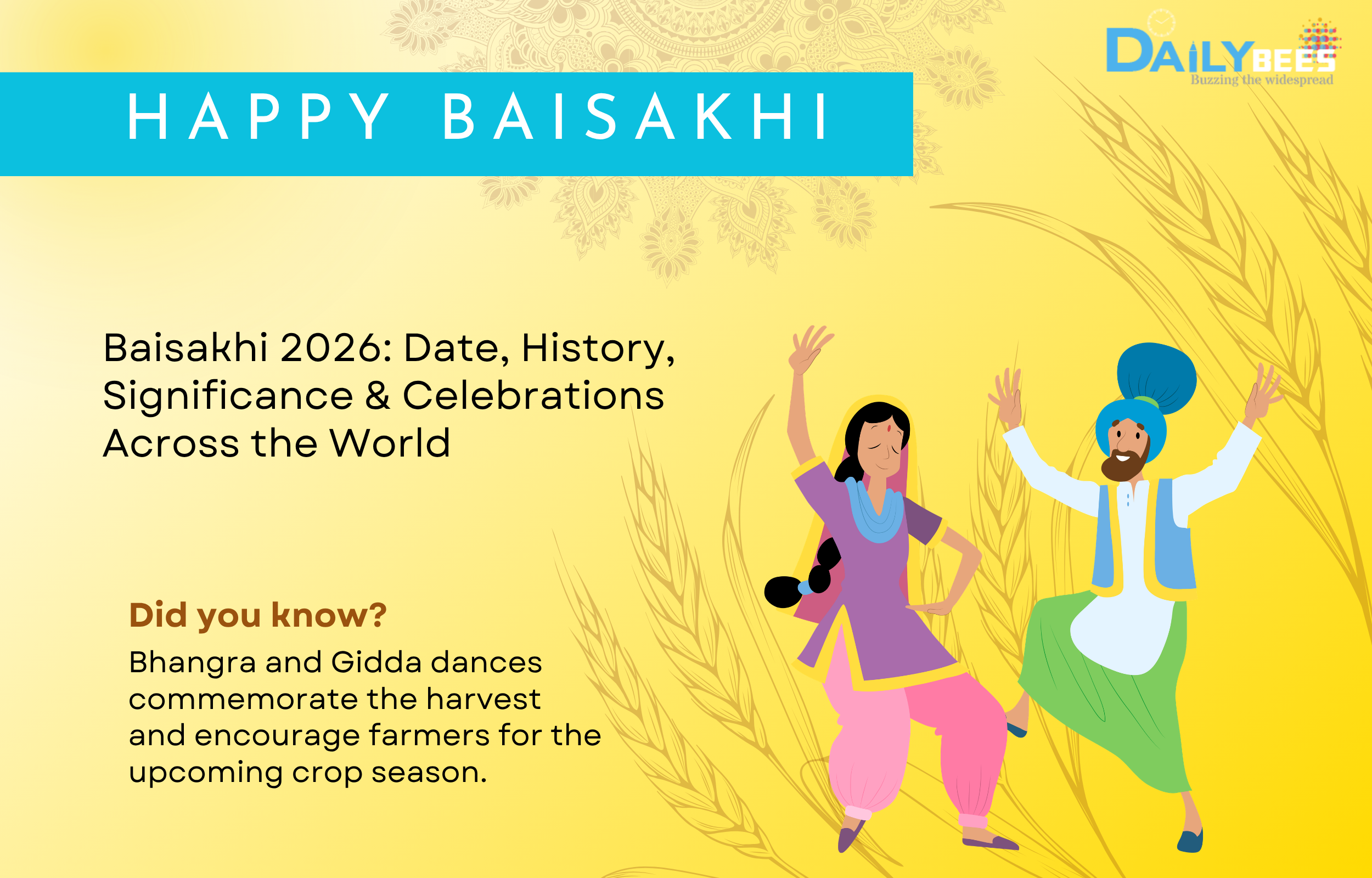
On April 14, 2026, Baisakhi 2026, often referred to as Vaisakhi 2026, will be observed. This colorful celebration, which has great religious and historical significance in Sikhism, signifies the harvest season in India, particularly in Punjab.
The Baisakhi festival is a celebration of prosperity, thankfulness, and camaraderie that is widely observed. This is the day when the tenth Guru, Guru Gobind Singh Ji established Holy Khalsa in 1699.According to the Hindu Solar Calendar, the day is also observed as Sikh New Year.
Table of Contents
History and Significance of Baisakhi
In Sikhism, this day is highly significant. This day honors Guru Gobind Singh ji’s founding of the Khalsa Path in 1699. He founded a community that promoted equality, bravery, and commitment. He started the Panj Pyare, which introduced spiritual discipline and togetherness and completely altered the Sikh community’s situation.
One of the most important festivals observed by the Sikh community is Baisakhi. Among these, Baisakhi has great religious, cultural, and historical significance. Sikh New Year, also known as Punjabi New Year, begins with this festival. This is also known as the Harvest Festival. The harvest season, new beginnings, fresh starts, new objectives, new ideas, and creating new plans for the upcoming year are all celebrated here. This is an excellent opportunity for children to thank God, ask for enough, and ask for forgiveness for any wrongdoings they may have committed, both intentionally and unintentionally. This is the ideal time to rejoice in the atmosphere of wealth and solidarity.
Formation of Khalsa Panth
Guru Gobind Singh Ji established the Khalsa Panth, a group of initiated Sikhs committed to opposing oppression, social injustice, and inequity, on Baisakhi Day, April 13, 1699, at Anandpur Sahib. He established a casteless society by baptizing the “Panj Pyare” (Five Beloved Ones) with Amrit and forming a saint-soldier order with five Ks. Important Elements of the Khalsa Panth’s Formation:
- The Request for Action: Guru Gobind Singh Ji tested people’s bravery and faith in 1699 by asking for volunteers who were willing to lose their life.
- Panj Pyare (Five Beloved Ones): The earliest members of the Khalsa were five individuals from various regions and backgrounds who gave their lives.
- Amrit Sanchar (Initiation): While chanting prayers and encouraging fraternity, the Guru made Amrit (nectar) by swirling sugar and water with a double-edged sword.
Baisakhi Celebration Across The World
India (Punjab): The center of festivities, with lively folk dances like Bhangra and Gidda, fairs, and local celebrations.
Canada: Large-scale parades and major festivities take place in cities with sizable Punjabi populations, such as Surrey, Vancouver, and Toronto.
United Kingdom: Large public processions are held in London and other cities with sizable South Asian communities (Nagar Kirtan).
United States: Gurdwaras all around the country celebrate with community langar and spectacular morning processions.
In Australia, vibrant Sikh communities commemorate with cultural events and parades.
Worldwide: Devotion and community events are held on this day wherever there is a Sikh community.
Baisakhi Festival Rituals
During Baisakhi, “Awat Pauni” is a significant custom. Here, people gather and sing beautiful folk melodies while harvesting crops to the lively beats of the dhol. A religious procession known as “Nagar Kirtan” is another special and essential component of the festivities. Nagar Kirtan means “town hymn singing” in literal translation. Hymns and chants from the Guru Granth Sahib, the Sikh holy book, are sung by a group of people. Five Khalsa dressed as Panj Pyaras lead them, and as a sign of respect, they carry the holy book with them.
Traditional Baisakhi Food and Dress
The Punjabi harvest festival, Baisakhi, is celebrated with rich, soothing dishes and colorful, traditional clothing, frequently in shades of orange and yellow. Men dress in turbans and kurta-pyjamas, while women wear embroidered Phulkari garments or Patiala suits. Sarson da Saag with Makki di Roti, Chole Bhature, and desserts like Kada Prasad, Kheer, and Meethe Chawal are examples of traditional dishes.
Conclusion
Baisakhi is a colorful celebration that commemorates both the harvesting of Rabi crops and the solar new year. It is a sign of thankfulness, harmony, and wealth. For Sikhs, it is extremely significant since it commemorates Guru Gobind Singh’s founding of the Khalsa Panth in 1699. It is a joyful reminder of community, tradition, and commitment to serving humanity by fusing spiritual renewal with cultural celebrations.