




























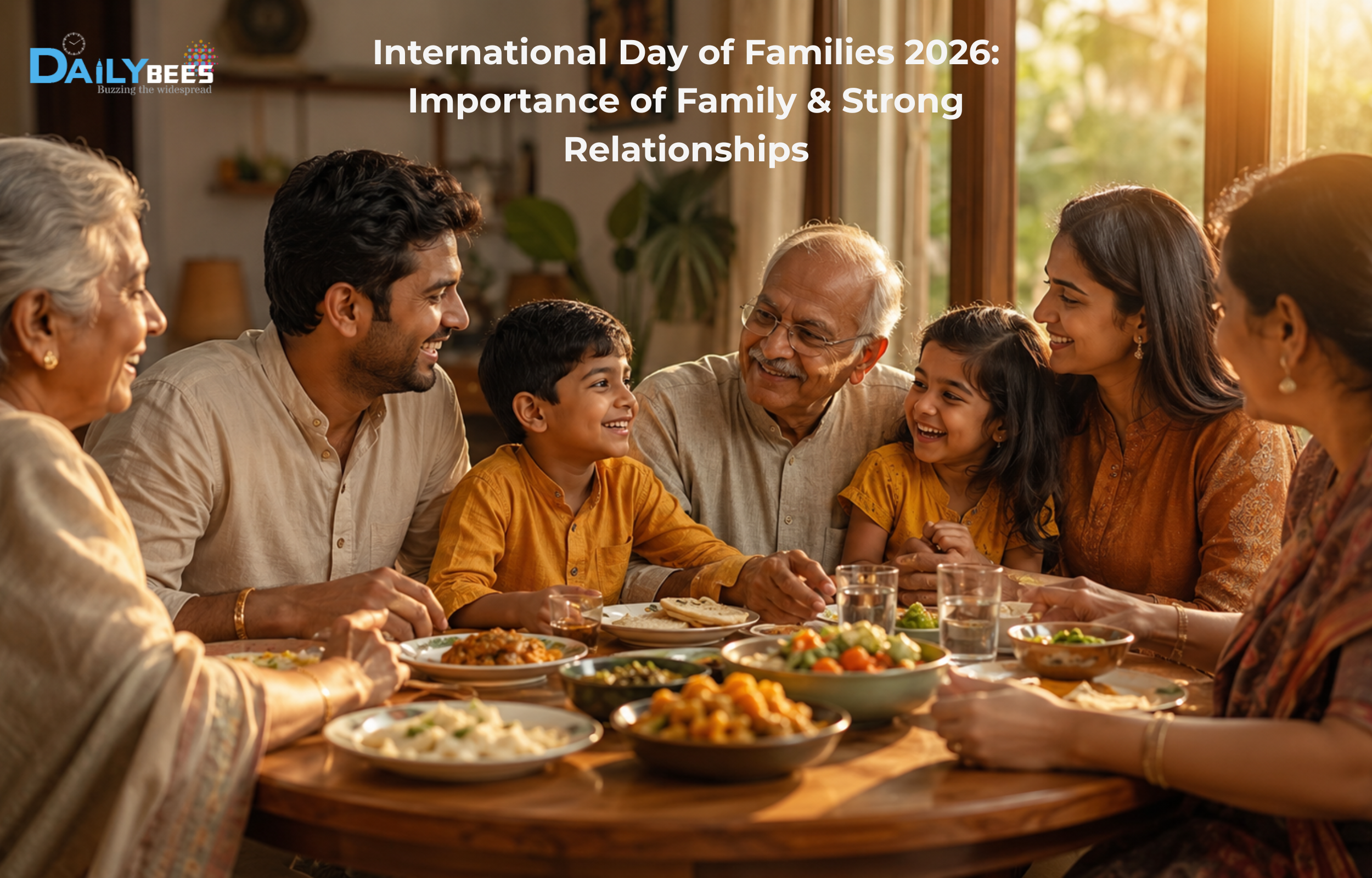
Introduction – More Than Just a Date on the Calendar
It often begins with something small. A Sunday lunch where everyone gathers around the table, sharing stories between bites. A late-night conversation with a parent that turns into unexpected life advice. Even a heated sibling argument that somehow dissolves into laughter minutes later. These everyday moments may seem ordinary, but they quietly shape who we are.
In the rush of deadlines, responsibilities, and digital distractions, these moments can easily slip by unnoticed. We assume they will always be there until we pause long enough to realize how deeply they matter. That’s where the International Day of Families steps in, not just as a date, but as a gentle reminder to slow down, look around, and appreciate the people who form our first and most enduring support system.
What Is the International Day of Families?
The International Day of Families was established by the United Nations in 1993 and is observed every year on May 15. Its purpose is simple yet profound: to highlight the importance of families as the basic unit of society.
Each year, the day is centered around a specific theme that reflects evolving social concerns and global priorities. The 2026 theme focuses on “Families and Climate Action: Building Sustainable Futures Together”, emphasizing how families play a crucial role in shaping values, habits, and behaviors that impact the environment and future generations.
Beyond themes and observances, the essence of this day lies in recognition, acknowledging the silent strength, resilience, and influence of families in nurturing individuals and communities alike.
The Many Faces of Family Today
The idea of “family” has changed significantly over time. Gone are the days when it was defined by a single structure. Today, families come in many forms, each equally valid and meaningful.
There are nuclear families, parents and children navigating life together in compact units. There are joint families, rich with shared responsibilities, traditions, and multiple generations under one roof. Single-parent households reflect strength and resilience, often balancing multiple roles with grace.
Then there are long-distance families, connected more by video calls and messages than physical presence. Despite the miles, emotional bonds remain strong, proving that proximity isn’t the only measure of closeness.
And perhaps most beautifully, there are “chosen families” – friends who step into our lives and become just as important as those we are related to by blood. They remind us that family is not only about where we come from, but also about who stands by us.
In this evolving world, family is no longer defined by structure. It is defined by connection, care, and commitment.
What Strong Families Actually Look Like
It’s easy to imagine that strong families are those without conflict or imperfections. But the truth is quite the opposite. Strong families are not perfect, they are present.
They communicate, even when conversations are difficult. They build trust over time, through honesty and consistency. They share responsibilities, understanding that every member plays a role in maintaining harmony.
Most importantly, strong families create a space of emotional safety. A place where you can be yourself without fear of judgment. Where failures are met with encouragement rather than criticism. Where achievements, big or small, are celebrated wholeheartedly.
Strength in families doesn’t come from avoiding challenges, it comes from facing them together.
Challenges Modern Families Face
Despite their importance, families today face a unique set of challenges.
One of the most common struggles is the battle between screen time and quality time. With smartphones, streaming platforms, and social media dominating our attention, meaningful conversations often take a backseat.
Work-life imbalance is another pressing issue. Long working hours, commute times, and professional stress leave little room for family interaction. Many people find themselves physically present but emotionally unavailable.
Mental health, once a taboo topic, is now gradually entering family conversations but not without difficulty. Generational differences often make it hard to express emotions openly or seek support within the household.
And then there’s the generation gap itself. Differences in values, lifestyles, and perspectives can create misunderstandings. Yet, these differences also offer an opportunity for learning, if approached with empathy and openness.
These challenges are real, but they are not insurmountable. Awareness is the first step toward change.
Simple Ways to Celebrate This Day
Celebrating the International Day of Families doesn’t require grand gestures. Sometimes, the simplest acts carry the most meaning.
Cook a meal together. The process of preparing food as a team can be as fulfilling as eating it. Share stories, laugh over mistakes, and enjoy the experience.
Unplug for a few hours. Put away devices and focus entirely on each other. Even a short period of undivided attention can strengthen bonds.
Write a letter to a family member. In a world of instant messaging, a handwritten note carries a personal touch that is hard to replicate.
Start a family tradition. It could be a monthly dinner, a yearly trip, or even a weekly movie night. Traditions create memories that last a lifetime.
These small actions don’t just celebrate the day, they nurture relationships in lasting ways.
Conclusion – Come Home, Often
Family doesn’t always demand attention, but it quietly deserves it. It’s in the background of our lives, offering support, comfort, and belonging even when we don’t actively acknowledge it.
The International Day of Families is not about grand celebrations. It’s about pausing, reflecting & reconnecting.
Because at the end of the day, no matter how far we go or how much we achieve, there is something deeply comforting about knowing we have a place and people to come back to.
So, come home. Not just physically, but emotionally. And do it often.