




























INTRODUCTION
Bohag Bihu, also known as Rongali Bihu, is one of the most vibrant and cherished festivals of Assam. Celebrated with music, dance, feasting, and traditional rituals, it marks the Assamese New Year and the joyful arrival of spring. The festival reflects the deep connection between Assamese culture and agriculture, symbolizing renewal, prosperity, and hope for a fruitful year ahead. Families come together to clean homes, wear traditional attire, and participate in lively community celebrations.
In 2026, Bohag Bihu will be observed from April 14 to April 20, bringing communities across Assam together to welcome a fresh beginning with enthusiasm, gratitude, and cultural pride.
THE THREE BIHU FESTIVALS: CELEBRATING ASSAM’S SEASONAL RHYTHM
In Assam, Bihu is not limited to a single celebration. Instead, it is a cycle of three festivals observed at different times of the year, each closely tied to the agricultural calendar and seasonal changes. Together, these celebrations highlight the deep relationship between nature, farming traditions, and Assamese culture.
- Rongali Bihu (Bohag Bihu) – The most lively and widely celebrated Bihu festival, observed in spring. It marks the Assamese New Year and the beginning of a new agricultural season, filled with music, traditional Bihu dance, and vibrant community celebrations.
- Kongali Bihu (Kati Bihu) – Celebrated in autumn, this Bihu has a quieter and more reflective atmosphere. Farmers light lamps in fields and pray for the healthy growth and protection of crops.
- Bhogali Bihu (Magh Bihu) – Observed in winter, this Bihu focuses on harvest celebrations and community feasts, expressing gratitude for a successful farming season.
Together, these three Bihu festivals beautifully represent the seasonal cycle of life in Assam.
THE SEVEN DAYS OF BOHANG BIHU: A FESTIVAL THAT UNFOLDS DAY BY DAY
Unlike many single-day celebrations, Bohag Bihu unfolds over several days, with each day carrying its own rituals and cultural meaning. The sequence reflects gratitude toward nature, animals, people, and the divine—making the festival both joyful and meaningful.
- Day 1 – Goru Bihu: The celebration begins with honoring cattle, which play an essential role in farming. Cows and bulls are bathed, decorated, and lovingly cared for as a sign of gratitude.
- Day 2 – Manuh Bihu: This day focuses on people. Families wear new clothes, elders offer blessings, and the traditional gamosa is exchanged as a gesture of respect and affection.
- Day 3 – Gosai Bihu: Devotion takes center stage as households worship deities and seek blessings for the new year.
- Days 4–7: The festive spirit expands into community feasts, cultural programs, traditional Bihu dance, and music performances, bringing villages and cities together in celebration.
THE HEARTBEAT OF BIHU: DANCE, MUSIC AND COMMUNITY TRADITIONS
No Bihu celebration is complete without its lively music and energetic dance performances.
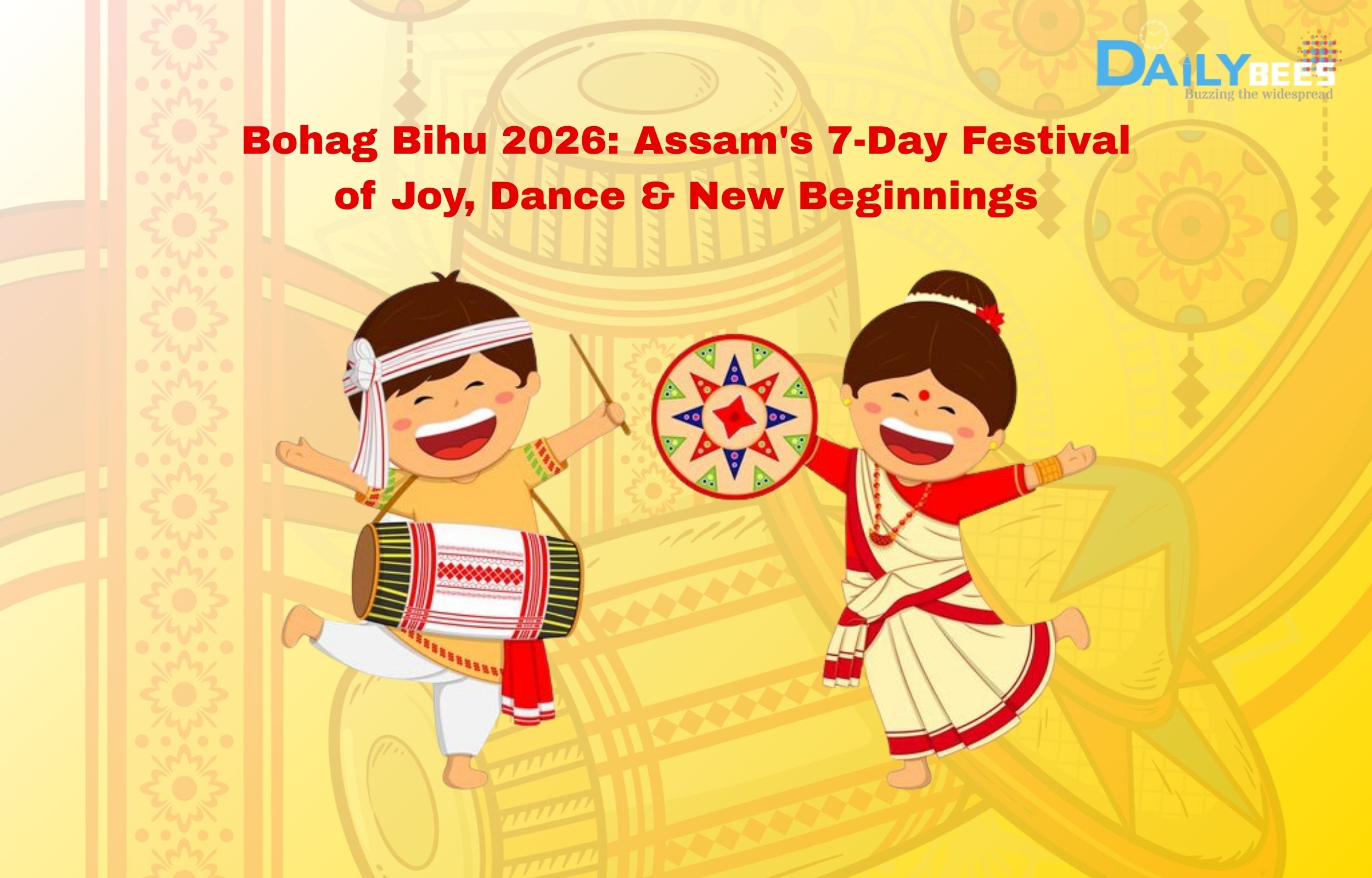
💃Dance: The Bihu dance is one of Assam’s most recognized cultural expressions, known for its rhythmic movements, graceful hand gestures, and vibrant energy.
Dancers wear traditional attire such as the mekhela chador for women and dhoti–gamosa for men, adding color and elegance to the performance.
🎵Music: Music plays an equally important role, with traditional instruments creating the festival’s signature sound:
- Dhol – the powerful drum that sets the rhythm
- Pepa – a horn instrument made from buffalo horn
- Gogona – a bamboo mouth instrument producing unique tones
- Taal – small cymbals that add rhythmic beats
👩🎤Husori: Another cherished tradition is Husori, where groups of singers and performers visit homes, offering songs, blessings, and festive cheer in exchange for hospitality.
TRADITIONAL FLAVOURS OF BIHU: FESTIVE FOODS OF ASSAM
Food is an inseparable part of Bihu celebrations, reflecting Assamese hospitality and the joy of sharing homemade delicacies with family and guests. During Bohag Bihu, kitchens come alive with traditional recipes prepared from rice, jaggery, coconut, and seasonal ingredients.
- Pitha (Rice Cakes) – One of the most loved Bihu treats. Popular varieties include:
- Til Pitha (thin rice rolls filled with sesame and jaggery)
- Ghila Pitha (soft fried rice cakes)
- Tekeli Pitha (steamed rice cake).
These are usually made using rice flour, coconut, and natural sweeteners.
- Laru – sweet balls made with coconut or sesame seeds
- Jolpan – a traditional combination of flattened rice, curd, jaggery, and puffed rice
- Tamul-Paan – betel nut and leaf offered as a symbol of respect and hospitality
Bihu Feast Dishes often include rice, lentils, vegetables, fish, and local herbs, creating a wholesome celebratory spread.
COLOURS OF TRADITION: THE ATTIRE OF BIHU
Traditional clothing adds elegance and cultural pride to Bihu celebrations, reflecting the rich heritage of Assam. During the festival, people dress in vibrant attire that highlights Assamese craftsmanship and identity.
- Mekhela Chador (for women): The graceful two-piece traditional outfit worn by Assamese women. Often woven in silk or cotton with red motifs, it symbolizes beauty, tradition, and festive spirit.
- Dhoti & Gamosa (for men): Men usually wear a dhoti paired with a gamosa draped around the neck or head, creating a simple yet culturally significant look during Bihu performances and gatherings.
Significance of the Gamosa: More than just a cloth, the gamosa represents Assamese identity, respect, and honor. It is commonly gifted during Manuh Bihu as a gesture of goodwill, blessings, and cultural pride.

BIHU BEYOND ASSAM: A FESTIVAL CROSSING BORDERS
While Bihu is deeply rooted in Assam, its celebrations now extend far beyond the state, connecting communities across regions and continents.
- Across Northeast India: Bihu is joyfully celebrated in neighboring states like Arunachal Pradesh, Nagaland, and Meghalaya, where Assamese communities organize cultural programs, dances, and festive gatherings.
- Assamese Diaspora Worldwide: From Delhi and Mumbai to cities in the United States, the UK, Canada, and Australia, Assamese associations host Bihu events featuring traditional music, dance performances, and community feasts.
- Growing Global Recognition: Through cultural festivals, social media, and international performances, Bihu is gaining global attention as a vibrant celebration of spring, community spirit, and the rich traditions of Assam.
BIHU’S BOND WITH NATURE AND ANIMALS
At its core, Bihu celebrates the deep relationship between people, nature, and agriculture in Assam. The festival coincides with the arrival of spring and the beginning of a new farming cycle, symbolizing renewal and hope for a prosperous harvest.
- Connection with Seasons: Bihu reflects the changing agricultural seasons and the start of crop cultivation.
- Respect for Nature: Rituals during the festival express gratitude to the land, rivers, and natural resources that sustain rural life.
- Goru Bihu Tradition: The first day honors cattle, where farmers bathe, decorate, and feed cows and bulls, showing appreciation for their vital role in farming.
CONCLUSION
More than just a festival, Bihu reflects the spirit, traditions, and agricultural roots of Assam. From vibrant dances and music to heartfelt rituals honoring nature and cattle, Bohag Bihu welcomes the Assamese New Year with joy and gratitude. As communities gather to celebrate renewal and togetherness, the festival continues to preserve cultural heritage while spreading warmth, happiness, and hope for a prosperous year ahead.
BOHAG BIHU WISHES & INSTAGRAM/WHATSAPP CAPTIONS
Celebrate the spirit of Bihu by sharing warm greetings with loved ones. Here are some short wishes and captions in English and Assamese perfect for WhatsApp or Instagram.
- “Wishing you joy, prosperity, and new beginnings this Bohag Bihu. Happy Rongali Bihu!” 🌼
- “May the rhythm of Bihu bring happiness, peace, and prosperity to your life.”
- “Bohag Bihu’r subhechha! May this Assamese New Year fill your days with positivity and success.”
- “Let the colors, music, and traditions of Bihu bring warmth to your heart. Happy Bihu!”
- Assamese: “বহাগ বিহুৰ আন্তৰিক শুভেচ্ছা আৰু অভিনন্দন।”
(Heartfelt wishes for a joyful Bohag Bihu.)
- Assamese: “ৰঙালী বিহুৱে আপোনাৰ জীৱনত আনন্দ, শান্তি আৰু সমৃদ্ধি লৈ আহক।”
(May Rongali Bihu bring happiness, peace, and prosperity to your life.)
Assamese: “নতুন বছৰে আপোনাৰ জীৱনত নতুন আশা আৰু সুখ কঢ়িয়াই আনক। শুভ বিহু!”
(May the New Year bring fresh hope and happiness. Happy Bihu!)
“Celebrate tradition, spread happiness, and welcome new beginnings. Happy Bohag Bihu!” 🌿