




























By Staff Reporter
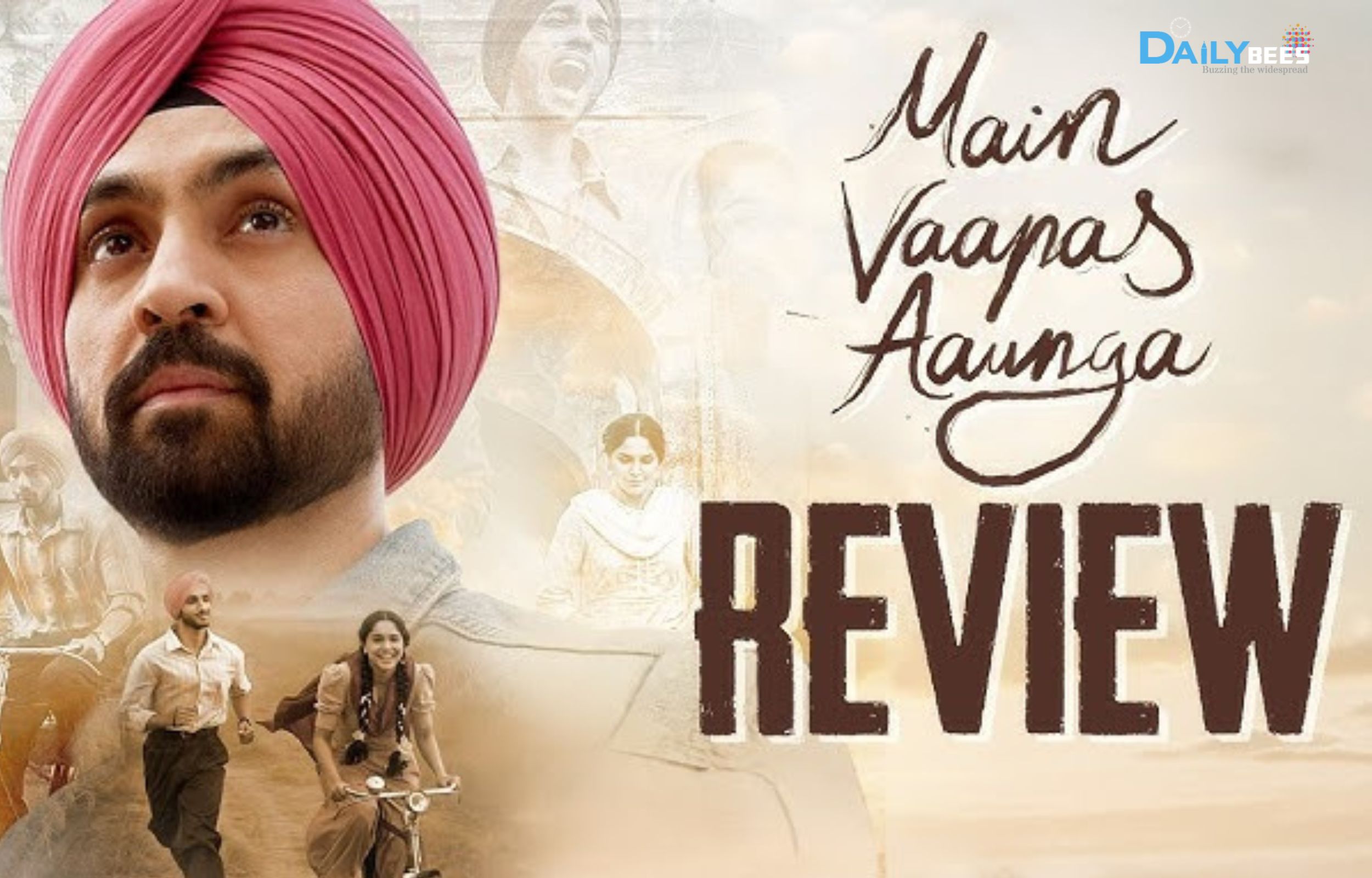
New Delhi: The recently released film “Mein Wapis Aaunga” offers an emotionally driven narrative centered on redemption, identity, and second chances. Translating to “I Will Return,” the film attempts to explore the psychological and emotional journey of a man confronting his past, while reconnecting with a life he once left behind.
It is a film that attempts to blend emotional storytelling with themes of redemption, identity, and resilience. From its very title, which translates to “I Will Return,” the movie signals a narrative rooted in comeback, unfinished journeys, and the human desire for closure. While the film has its share of imperfections, it manages to leave a lasting impression through its emotional depth and character-driven storytelling.
A Story of Return and Reckoning
The film follows a protagonist who reappears after a long absence caused by a life-altering event. Told through a non-linear narrative, the storyline moves between past and present, gradually uncovering the circumstances that led to his disappearance. While this storytelling approach adds an element of suspense, it occasionally disrupts the narrative flow due to abrupt transitions.
Despite these structural challenges, the film manages to maintain viewer interest by slowly revealing emotional layers tied to the protagonist’s journey.
Strong Emotional Undertone
At its core, “Mein Wapis Aaunga” thrives on emotional depth. The narrative focuses heavily on themes of guilt, regret, and the longing for redemption. The protagonist’s return is not merely physical but also symbolic of his attempt to reconcile with unresolved emotions and fractured relationships.
The film effectively portrays how time alters relationships, with loved ones reacting differently to his return—some with acceptance, others with hesitation or resentment.
Performances Anchor the Film
The lead actor delivers a compelling performance, capturing the internal conflict of a man burdened by his past. His portrayal balances vulnerability and resilience, making the character relatable despite his flaws.
Supporting actors also contribute significantly, adding authenticity to the story. Their performances help highlight the emotional consequences of the protagonist’s absence, strengthening the overall narrative impact.
Visual Storytelling Remains Subtle
Visually, the film adopts a realistic approach. Cinematography relies on natural lighting and grounded settings, enhancing the film’s emotional tone. The use of muted colors in present-day scenes contrasts with warmer tones in flashbacks, symbolizing nostalgia and lost time.
This restrained visual style ensures that the focus remains on character development rather than spectacle.
Music Complements but Doesn’t Elevate
The background score is minimalistic and avoids overpowering the scenes. In several moments, silence is used effectively to emphasize emotional tension. However, the music occasionally falls short in maintaining engagement during slower sequences.
Exploration of Moral Complexity
One of the film’s notable strengths is its portrayal of moral ambiguity. The protagonist is not depicted as a conventional hero; instead, the story acknowledges his mistakes and the consequences of his actions.
The film raises important questions about forgiveness and accountability, prompting viewers to reflect on whether redemption can truly erase past wrongs.
Pacing Issues and Predictable Climax
While the film succeeds in building emotional depth, it struggles with pacing, particularly in the second half. Certain subplots are introduced but not fully developed, leaving gaps in the storytelling.
The climax, although emotionally satisfying, follows a predictable trajectory. A more unconventional ending could have enhanced the film’s impact.
Dialogues Strike the Right Note
The film’s dialogues are simple yet effective. Rather than relying on dramatic monologues, the script uses understated conversations to convey complex emotions. This approach adds realism and keeps the narrative grounded.
Final Verdict
“Mein Wapis Aaunga” is a sincere attempt at telling a story of redemption and emotional healing. While it is not without flaws—particularly in pacing and narrative structure—the film’s strong performances and heartfelt storytelling make it worth watching.
For viewers who appreciate character-driven dramas over fast-paced entertainment, the film offers a thoughtful and introspective experience.
In terms of thematic depth, the film touches upon issues such as loss, regret, forgiveness, and the passage of time. It emphasizes the idea that while one cannot change the past, it is possible to confront it and move forward. This message is conveyed effectively through the protagonist’s journey, making the film both introspective and inspiring.
Rating: 8.4/10
Overall, “Mein Wapis Aaunga” is a film that prioritizes emotional storytelling over spectacle. It may not appeal to viewers looking for fast-paced entertainment or high-energy drama, but for those who appreciate character-driven narratives, it offers a rewarding experience. The film’s imperfections do not overshadow its strengths, and its sincere approach to storytelling makes it worth watching.
It is a thoughtful and emotionally engaging film that explores the complexities of human relationships and the possibility of redemption. While it could have benefited from tighter pacing and a more innovative narrative structure, its strong performances and heartfelt storytelling ensure that it leaves a lasting impression. It is a film that reminds us that returning is not just about going back—it is about facing the past and finding the courage to move forward. In a cinematic landscape often dominated by high-energy narratives, “Mein Wapis Aaunga” stands out for its quiet exploration of human emotions.