



























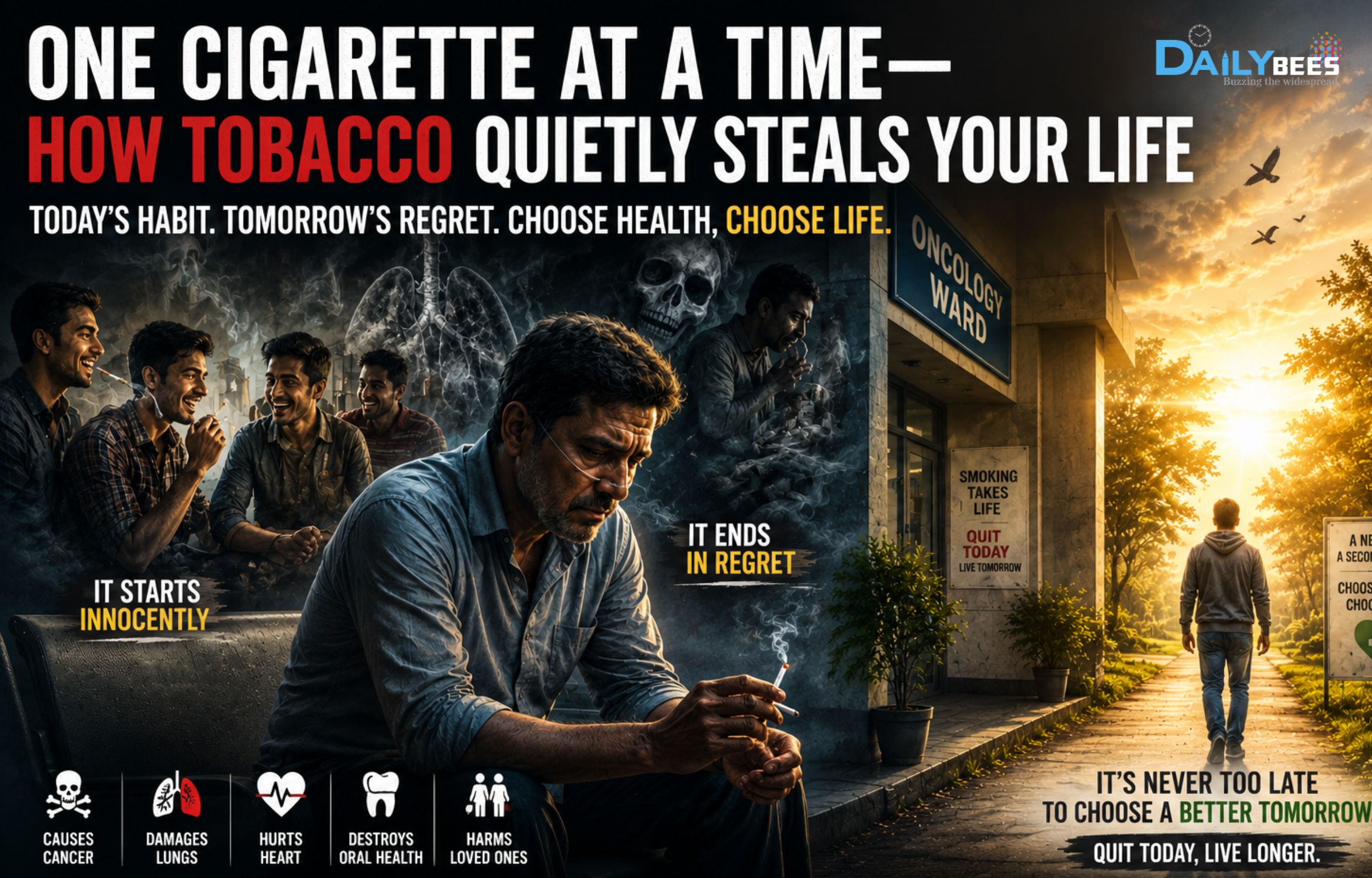
The cigarette in his hand never looked dangerous at 18.
It was just a habit picked up with friends after college classes — “only occasionally,” he used to say. Years passed. Occasional became daily. Daily became impossible to stop. At 45, he sat outside an oncology ward, thinner than he remembered himself, struggling to breathe between sentences. The doctors called it lung cancer. He called it “something I never thought would happen to me.”
And he is not alone.
Tobacco kills more than 8 million people every year worldwide, making it the single most preventable cause of death on Earth. Behind every number is a father who won’t come home, a mother battling disease, or a young person unknowingly walking toward addiction one puff at a time.
What makes tobacco especially frightening is not just its danger — but its deception. It rarely destroys lives overnight. Instead, it works silently, slowly damaging the lungs, heart, blood vessels, brain, and almost every organ in the body while convincing people they are still in control.
Despite decades of awareness campaigns and warning labels, millions continue to start smoking every year, while countless others struggle desperately to quit. That is precisely why the world observes World No Tobacco Day — not merely as a health event, but as a reminder that prevention can save millions of lives before it is too late.
What Is World No Tobacco Day?
Every year on May 31, the world pauses to speak about a habit that steals millions of lives silently — tobacco. World No Tobacco Day was initiated by the World Health Organization in 1987 to spread awareness about the devastating effects of tobacco and to encourage people toward healthier, tobacco-free lives.
Each year carries a different theme, focusing on a new challenge in the fight against tobacco. The WHO 2026 theme — “Unmasking the Appea: Countering Nicotine and Tobacco Addiction” — highlights how tobacco and nicotine industries use attractive packaging, flavours, and marketing tactics to trap especially the younger generation into addiction.
But beyond campaigns and slogans, the message remains deeply human: awareness can save lives, and one informed decision today may prevent years of suffering tomorrow.
What Tobacco Does to Your Body?
Tobacco harms the body slowly and silently, often showing its worst effects only after years of addiction.
- Lungs: Causes chronic cough, breathlessness, COPD, and lung cancer.
- Heart: Damages blood vessels and raises the risk of heart attacks and strokes.
- Mouth & Teeth: Leads to stained teeth, gum disease, bad breath, and oral cancer.
- Skin & Aging: Reduces blood supply to the skin, causing wrinkles and early aging.
- Fertility: Can affect fertility in both men and women and harm pregnancy outcomes.
- Beyond Cancer: Tobacco is also linked to weak immunity, poor healing, and several long-term illnesses.
- Secondhand Smoke: Family members, especially children, may suffer from asthma, lung infections, and heart problems simply by breathing nearby smoke.
The Shocking Numbers — India Specifically
India is the world’s second-largest consumer of tobacco, with nearly 267 million adults using it in some form.
And it is not just cigarettes.
- Products like gutka, khaini, beedi, zarda, and pan masala remain deeply common, especially in rural and lower-income communities.
- Oral cancer linked to smokeless tobacco has become a major health burden in the country.
What is even more alarming is the age at which addiction begins. Studies show that many users start between 15–24 years, while some begin as early as 14 or younger.
Tobacco in India is no longer only a habit of adults — it is increasingly trapping the youth before they fully understand its lifelong consequences.
Why Is Quitting So Hard?
Quitting tobacco is not only about willpower — it is about fighting an addiction that affects both the brain and daily habits.
- Nicotine Addiction: Nicotine releases “feel-good” chemicals in the brain, making the body crave tobacco again and again.
- Habit & Triggers: Many people associate smoking or chewing tobacco with stress relief, tea breaks, loneliness, or social gatherings.
- Social Influence: In many places, tobacco use is so normalised that refusing it can feel socially uncomfortable, especially among young people.
- Withdrawal Symptoms: When a person tries to quit, they may experience irritability, headaches, anxiety, restlessness, poor concentration, and strong cravings.
That is why quitting is difficult — but with support and persistence, it is absolutely possible.
How to Actually Quit — Practical Steps
Quitting tobacco does not happen in one perfect day. It happens through small decisions repeated again and again.
- Set a Quit Date: Choose a realistic date and prepare yourself mentally instead of waiting for the “perfect time” or doing “I’ll try tomorrow”.
- Use Nicotine Replacement Therapy (NRT): Nicotine gums, patches, and lozenges reduce breakthrough cravings and withdrawal symptoms.
- Identify Your Triggers: Stress, tea breaks, alcohol, or certain friends/peer pressure may trigger cravings. Replace the habit with chewing gum, water, or short walks.
- When Cravings Hit: Delay for 10 minutes, take deep breaths, drink water, or distract yourself — most cravings fade within minutes. Just 10 minutes, and you’ll find yourself in a better place!
- Seek Support: Family, friends, or support groups can make relapse less likely.
- Use Digital Help: India offers tools like mCessation and iQuit that provide daily motivation and guidance.
- For acute & chronic conditions: While acute addictions may require hospital help, chronic addictions on the other hand can be handled by building a will power. Many governmental and non governmental organisations like Dera Sacha Sauda and Isha campaign teach meditation methods to build the required will power.
Even reducing tobacco use is a step forward — because every cigarette not smoked is a small victory for the body.
How to Help Someone You Love Quit
Helping someone quit tobacco requires patience more than pressure. Lectures, anger, or constant criticism often push people deeper into guilt and addiction. Sometimes, simply listening helps more than advising.
- Support, don’t shame: Encourage small progress instead of focusing only on failures.
- Remove triggers: Keep cigarettes, tobacco products, and smoking cues away from shared spaces.
- Be patient with relapses: Many people fail several times before quitting successfully. A relapse is not the end of the journey.
- Celebrate small wins: Even one tobacco-free day matters.
Often, people quit not because they were forced to — but because someone stayed beside them long enough to believe they could.
Conclusion — The Best Day to Quit Was Yesterday. The Next Best Is Today.
Tobacco may steal health slowly, but quitting begins healing faster than most people realise. Every cigarette avoided, every craving resisted, and every small step away from addiction is a step back toward life — toward easier breaths, longer years, and moments that truly matter.
No one is “too addicted” or “too late” to try again. Some people quit in one attempt, others after many failures — but every attempt still counts. What matters is not how many times a person falls, but the decision to stand up once more.
Because in the end, quitting tobacco is not just about adding years to life.
It is about adding life to those years — for yourself and for the people who want you to stay.