


























Table of Contents
Why the Movement Has Become One of India’s Biggest Trending Topics
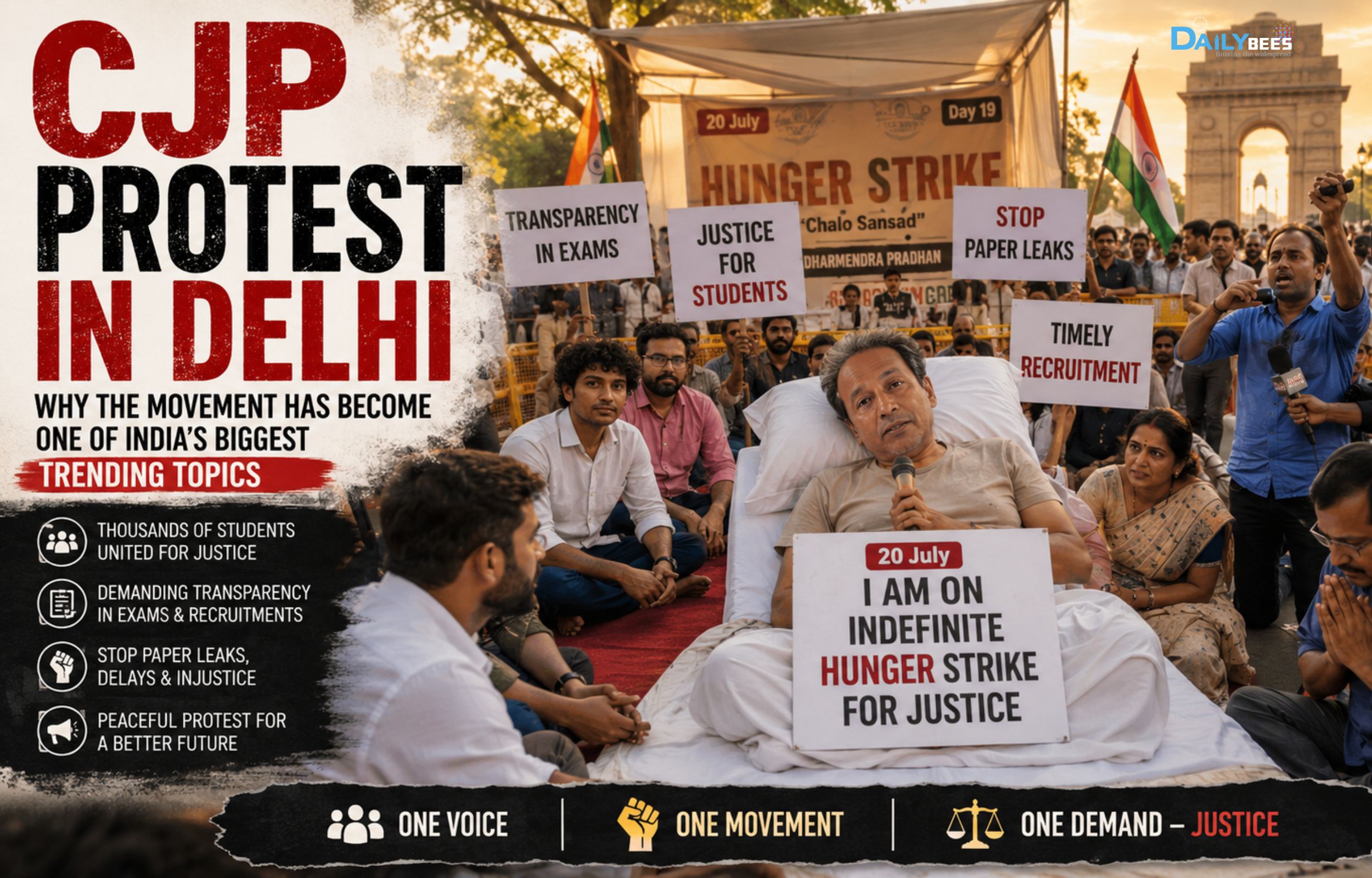
New Delhi: The ongoing CJP protest at Delhi’s Jantar Mantar has emerged as one of the most talked-about public movements in India. Over the past few weeks, thousands of students, job aspirants, social activists, and citizens have gathered in the national capital, demanding greater accountability over alleged examination irregularities, recruitment delays, and transparency in the education system. The movement has gained significant traction on social media, making hashtags related to the protest trend across platforms.
As of 16 July 2026, Sonam Wangchuk has been on his indefinite hunger strike for 19 days. He began the fast on 28 June 2026 at Jantar Mantar New Delhi.
He has reportedly lost over 9 kg during the fast. Doctors and several public figures have expressed concern about his deteriorating health. The Delhi High Court has directed authorities to monitor his health daily and provide medical intervention if his condition worsens.
The protest, organized by the Cockroach Janta Party (CJP), has drawn nationwide attention because it represents growing frustration among India’s youth regarding competitive examinations, delayed government recruitments, and concerns over alleged paper leaks. What began as a symbolic campaign has evolved into a large-scale movement attracting students from multiple states and support from well-known public figures.
Why Did the Protest Begin?
According to organizers, the primary objective of the protest is to demand greater transparency and accountability in India’s examination and recruitment systems. Protesters allege that repeated examination controversies and recruitment delays have affected the careers of millions of students preparing for competitive exams.
CJP founder Abhijeet Dipke has stated that the movement seeks systemic reforms rather than temporary solutions. Demonstrators have demanded stronger safeguards against examination irregularities and have called for responsibility from authorities overseeing recruitment and educational processes.
Jantar Mantar Becomes the Centre of the Movement
Delhi’s Jantar Mantar, historically known as India’s designated protest site, has become the focal point of the demonstrations. Every day, hundreds of students and supporters gather carrying placards, chanting slogans, and participating in peaceful sit-ins.
The organizers have maintained that their demonstrations are peaceful and constitutional. Protesters have also used social media extensively to mobilize support from students unable to travel to Delhi.
Sonam Wangchuk Joins the Protest
The movement received a significant boost when environmental activist Sonam Wangchuk joined the protest and began an indefinite hunger strike in solidarity with the demonstrators.
His participation transformed what had primarily been a student-led campaign into a broader national discussion. Wangchuk has emphasized peaceful democratic protest while urging authorities to engage constructively with the concerns raised by students and young job seekers. His deteriorating health during the hunger strike has further intensified public attention.
Growing Support across India
The CJP protest has attracted support from various sections of society, including students, educators, social activists, comedians, authors, and political leaders. Public personalities have visited Jantar Mantar or expressed solidarity through social media, amplifying the movement’s visibility.
As the protest continued, supporters organized awareness campaigns in different cities, highlighting issues such as examination transparency and youth employment.
Social Media Drives the Movement
One of the defining features of the CJP protest is its strong online presence. Videos from the protest site, speeches by organizers, and updates on the hunger strike have generated millions of views across social media platforms.
Digital campaigns have enabled students from across the country to participate virtually by sharing their personal experiences with competitive examinations and recruitment delays. The movement has particularly resonated with younger audiences, making it one of the country’s most widely discussed civic campaigns in recent weeks.
Health Concerns over Hunger Strike
As the hunger strike extended for several days, doctors and supporters expressed increasing concern regarding the health of Sonam Wangchuk and other participants.
Several prominent personalities appealed to the protesters to prioritize their health while continuing to pursue their demands through democratic means. Reports indicated that Wangchuk had lost significant weight during the fast, prompting widespread concern among supporters.
Police Arrangements and Security
Delhi Police deployed security personnel around Jantar Mantar to ensure law and order during the demonstrations. Barricades were installed around the protest venue, while authorities monitored crowd movement to maintain public safety.
Despite the large gatherings, organizers repeatedly appealed to participants to remain peaceful and cooperate with law enforcement agencies.
Calls for Dialogue
Many observers believe that the ongoing protest highlights broader concerns among India’s youth regarding education, employment opportunities, and institutional transparency.
Several commentators have suggested that constructive dialogue between protesters and authorities would be the most effective way to address the issues being raised. Protest leaders have also stated that meaningful discussions remain their preferred path forward.
Why the Protest Matters
India conducts some of the world’s largest competitive examinations, with millions of candidates appearing every year. Even isolated controversies can affect a large number of students, making transparency and trust critical components of the examination system.
The CJP protest reflects growing public expectations for efficient recruitment processes, timely examinations, and stronger institutional accountability. Regardless of differing political views, the movement has sparked an important national conversation about the future of education and employment in India.
What Happens Next?
The coming days are expected to be crucial for the protest. Organizers have announced plans for additional peaceful demonstrations, including a proposed march toward Parliament, while supporters continue to urge authorities to engage in meaningful discussions. Meanwhile, health concerns surrounding the hunger strike remain a major focus of public attention.
Whether the movement leads to policy changes or broader institutional reforms remains to be seen. However, the CJP protest has already become one of the defining public movements of the year, highlighting the aspirations and concerns of millions of young Indians seeking greater transparency, accountability, and confidence in the country’s education and recruitment systems.