























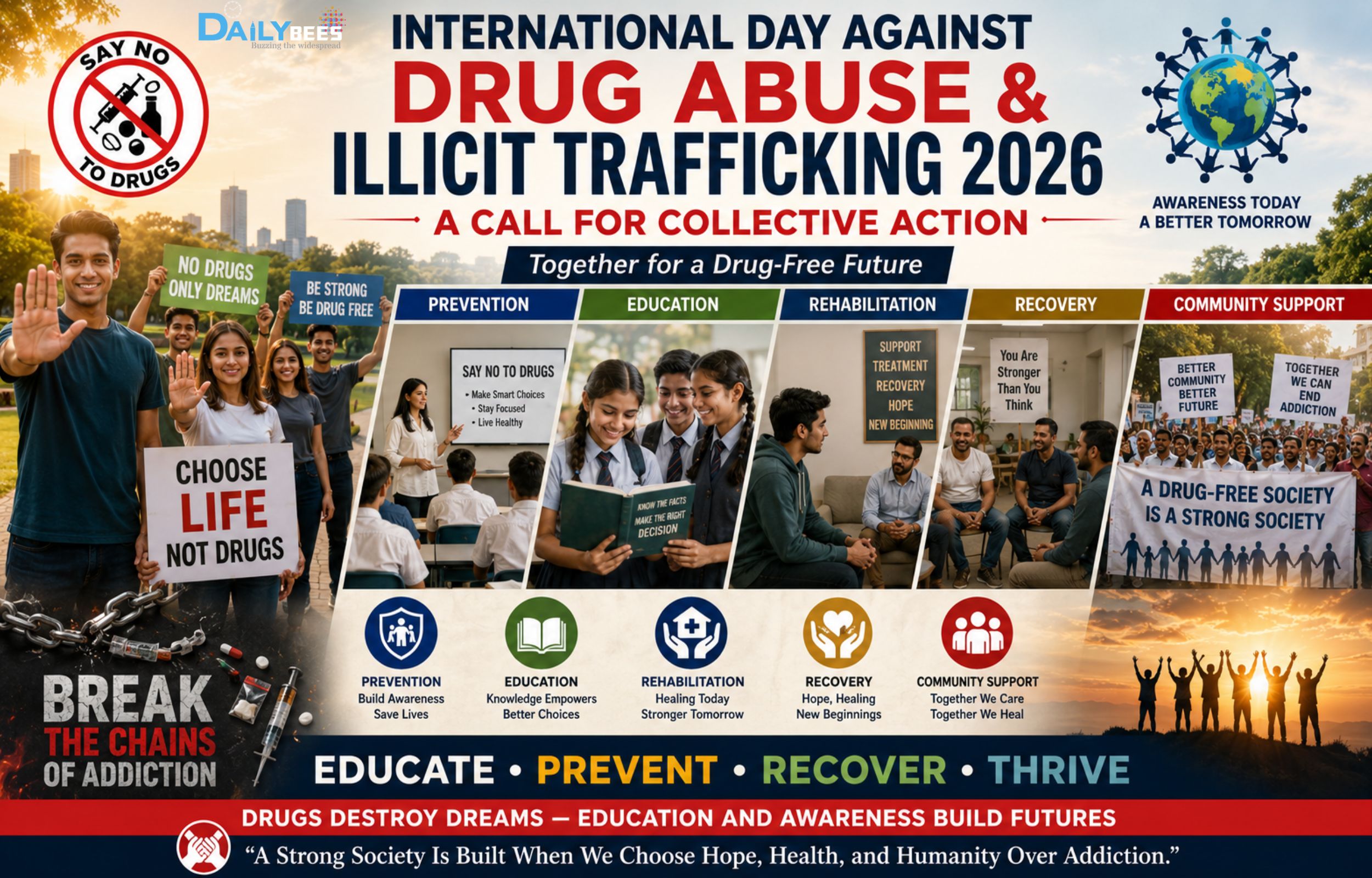
The International Day Against Drug Abuse and Illicit Trafficking is recognised on 26 June every year in India and world wide. This day emphasizes on the serious problems caused by drug abuse and illegal drug trade across the world. It aims to spread awareness about the harmful effects of drugs and encourages efforts to prevent addiction, provide treatment to affected individuals, and reduce drug trafficking.
Table of Contents
What is the Role of UNODC in controlling and preventing Drug Abuse?
The United Nations Office on Drugs and Crime (UNODC) plays an important role in organizing activities related to this observance. The organisation works intimately with governments, organizations, and communities to support drug control measures, strengthen prevention and treatment programs, and increase public awareness.
This international observance motivates countries to work together in combating drug-related crimes. Through cooperation, nations can exchange information, support one another, and take effective action against drug trafficking. It also encourages communities to participate actively by promoting education, healthy living, and support systems for individuals and families affected by addiction.
International Cooperation Against Drug Trafficking
Various events and awareness campaigns are organized world wide on this occasion. Workshops, seminars, exhibitions, and public awareness programs help educate people about the dangers of drug abuse and the importance of prevention and rehabilitation. These activities also highlight successful efforts to address drug-related challenges.
• Global Cooperation to Dismantle Drug Trafficking Networks
The day serves as a platform to promote evidence-based policies, effective prevention strategies, accessible treatment facilities, and support services for those struggling with addiction. It also emphasizes the need for global cooperation to dismantle drug trafficking networks and reduce the supply of illegal drugs.
• Education and Skill Building
Several measures are adopted to reduce drug abuse and trafficking. Prevention programs conducted by governments, NGOs, schools, and community organizations educate people about the risks of drug use and encourage healthy lifestyles. Educational institutions teach students decision-making skills, ways to resist peer pressure, and coping strategies to avoid substance abuse.
• Treatment and Rehabilitation Services
Treatment and rehabilitation services are essential for helping individuals recover from addiction. Counseling, medical treatment, rehabilitation centers, and recovery support programs enable people to rebuild their lives and reintegrate into society.
• Social Support and Aftercare Services
In addition, social support and aftercare services such as counseling, vocational training, employment assistance, and support groups help recovering individuals maintain a drug-free life. These services improve long-term recovery outcomes and support successful reintegration into the community.
Role of Government and Non Governmental Organizations
Government and non-governmental organizations (NGOs) utilize a collaborative, multi-tiered strategy to combat drug abuse and illicit trafficking. Governments focus on policy enforcement, border security, and healthcare infrastructure, while NGOs tackle grassroots prevention, community awareness, and the long-term rehabilitation and vocational integration of affected individuals.
The Role of Government Governments operate on a multi-stakeholder model, bridging law enforcement, public health, and social welfare. Their core responsibilities include:
1. Supply Reduction & Law Enforcement: Enacting and enforcing stringent national laws (such as the NDPS Act) to dismantle drug syndicates. Border guarding forces and coast guards conduct drastic operations to seize narcotics along land and maritime routes.
2. National Programs & Investments: Initiating wide-ranging schemes such as the National Action Plan for Drug Supply Reduction to structure evidence-based strategies, track abuse trends, and fund grassroot efforts.
3. Public Awareness Campaigns: Harnessing national platforms and e-pledges (like the MyGov portal) to diffondere anti-drug messages and establish toll-free helplines like MANAS 1933.
4. Availability of healthcare and treatment facilities: Facilitating Government hospitals and specialized de-addiction centers to provide medical detoxification and psychological care.
The Role of Non-Governmental Organizations (NGOs)
NGOs act as vital intermediaries between the government and the community, bringing empathy, flexibility, and culturally sensitive support to the fight against drug addiction. Their roles include:
1. Prevention Through Education and Awareness: Developing and conducting awareness programmes in schools, colleges, and communities to educate the younger generation about the dangers of drug abuse and encourage positive attitudes and healthy lifestyles.
2. Rehabilitation and Counseling: Operating Integrated Rehabilitation Centres for Addicts (IRCAs) that offer counseling services, family assistance, peer support, and medical care to help individuals recover from addiction.
3. Social Reintegration: Offering skill development programs, career guidance, and continuous post-rehabilitation assistance to support recovering individuals in rebuilding their lives, achieving self-sufficiency, and preventing relapse.
4. Reducing Stigma: Fostering community-based support systems that diminish the social stigma associated with substance dependence.
Collaboration Between Both Sectors
Because governments alone cannot reach every vulnerable community, strategic partnerships are universally utilized. The government provides vital funding, policy backing, and licensing to NGOs, while NGOs execute local initiatives on the ground. International entities like the United Nations Office on Drugs and Crime (UNODC) also collaborate extensively with both to foster cross-border intelligence and community-based family skills programs.
Role of Dera Sacha Sauda in combating Drug Abuse
Dera Sacha Sauda plays an important role in combating drug abuse by organizing awareness campaigns, seminars, rallies, and social service activities that educate people about the harmful effects of drugs. Under the guidance of Saint Dr Gurmeet Ram Rahim Singh Ji, the third spiritual master the organization encourages individuals, especially youth, to lead a healthy and disciplined life free from addiction. Through counseling, motivation, and de-addiction initiatives, it helps people overcome substance abuse and promotes a drug-free society by fostering community participation and social responsibility. To eliminate drug abuse in India and across the globe, various initiatives such as DEPTH, SAFE, and other awareness campaigns have been launched by Saint Dr Gurmeet Ram Rahim Singh Ji.
Conclusion
By observing this day, the global community renews its commitment to quit drug abuse and illicit trafficking. Through prevention, treatment, education, social support, and international cooperation, societies can work towards a healthier and safer future free from the harmful effects of drugs.