




























Introduction
If you’ve ever struggled with dull skin, acne, fine lines, dark spots, or dryness, you’re not alone. These are among the most common skincare concerns people experience regardless of age or skin type. While cleansers and moisturizers form the foundation of a skincare routine, they may not always provide the targeted treatment your skin needs.
That’s where face serums come in. Packed with concentrated active ingredients, face serums are designed to penetrate deeper into the skin and address specific concerns more effectively than traditional creams or lotions. Whether your goal is brighter skin, improved hydration, reduced wrinkles, or fewer breakouts, the right serum can make a noticeable difference.
We will explain what a face serum is, its key benefits, how to choose one based on your skin type, and the best way to apply it for maximum results.
What Is a Face Serum?
A face serum is a lightweight skincare product formulated with a high concentration of active ingredients. Unlike moisturizers, which primarily create a protective barrier to lock in moisture, serums are designed to deliver targeted ingredients deep into the skin.
Their smaller molecular structure allows them to absorb quickly, making them ideal for treating specific skin concerns.
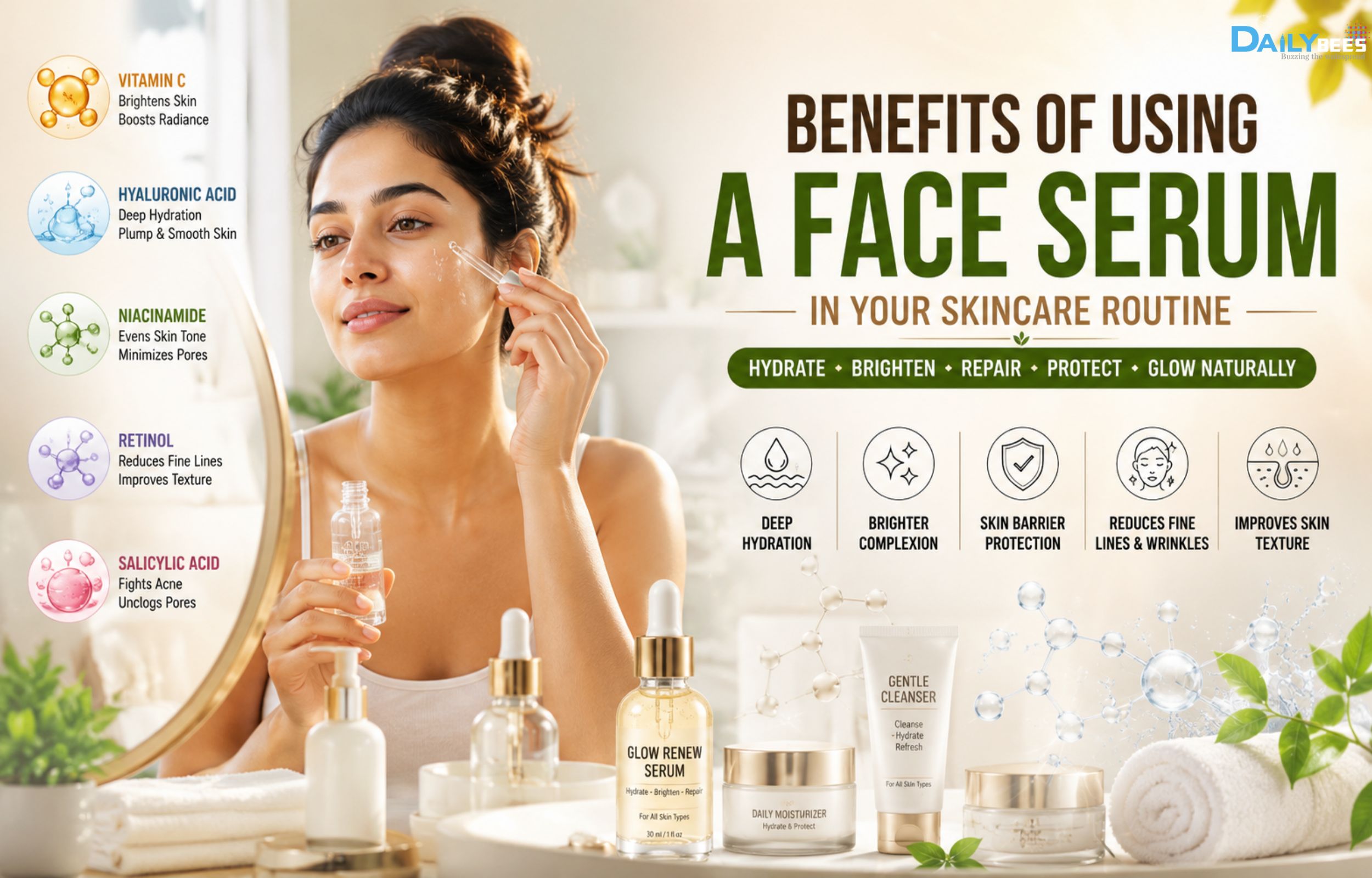
Some of the most common active ingredients found in face serums include:
Vitamin C
- Brightens dull skin
- Reduces pigmentation
- Protects against environmental damage
- Boosts collagen production
Hyaluronic Acid
- Provides intense hydration
- Helps retain moisture
- Makes skin appear plump and smooth
- Supports the skin barrier
Niacinamide
- Controls excess oil
- Minimizes enlarged pores
- Reduces redness
- Improves uneven skin tone
Retinol
- Reduces fine lines and wrinkles
- Speeds up skin renewal
- Improves skin texture
- Helps prevent acne
Salicylic Acid
- Unclogs pores
- Reduces acne
- Controls oil production
- Prevents future breakouts
Each ingredient serves a unique purpose, allowing you to customize your skincare routine according to your skin’s needs.
Key Benefits of Using a Face Serum
1. Deep Hydration and Skin Barrier Support
One of the biggest advantages of using a face serum is its ability to deeply hydrate the skin. Hydrating ingredients like Hyaluronic Acid attract water into the skin, leaving it soft, supple, and refreshed.
A well-hydrated skin barrier is essential because it helps protect against pollution, bacteria, and moisture loss. Regular use of a hydrating serum strengthens this barrier, reducing dryness and irritation over time.
2. Targeted Treatment for Specific Skin Concerns
Unlike general moisturizers, serums are formulated to address particular skincare issues.
Depending on the active ingredients, a serum can help with:
- Acne and blemishes
- Hyperpigmentation
- Dark spots
- Uneven skin tone
- Fine lines
- Wrinkles
- Dehydration
- Redness
For example, someone dealing with post-acne marks may benefit from Vitamin C or Niacinamide, while those concerned about aging may prefer Retinol-based formulas.
3. Improves Skin Texture and Natural Glow
Consistent use of the right serum can significantly improve your skin’s overall appearance.
Benefits include:
- Smoother skin texture
- Brighter complexion
- Reduced rough patches
- Smaller-looking pores
- Healthier glow
Many people notice their skin becoming more radiant after incorporating a quality serum into their daily routine.
4. Lightweight Formula with Fast Absorption
Face serums are known for their lightweight texture.
Unlike heavy creams that may leave a greasy finish, serums absorb quickly without clogging pores. This makes them suitable for all skin types, including oily and acne-prone skin.
Their fast absorption also allows active ingredients to work more efficiently beneath the skin’s surface.
How to Choose the Right Serum for Your Skin Type
Choosing the right serum is essential for getting the best results.
For Oily Skin
If your skin produces excess oil or is acne-prone, look for lightweight, non-comedogenic serums containing:
- Niacinamide
- Salicylic Acid
- Zinc
- Tea Tree Extract
These ingredients help regulate oil production while minimizing breakouts.
For Dry Skin
Dry skin benefits most from hydrating and nourishing ingredients such as:
- Hyaluronic Acid
- Ceramides
- Glycerin
- Vitamin E
- Squalane
These ingredients replenish moisture and reduce flakiness.
For Sensitive Skin
Sensitive skin requires gentle formulations.
Choose serums containing:
- Aloe Vera
- Centella Asiatica
- Panthenol
- Niacinamide (lower concentration)
Avoid products with excessive fragrance or alcohol if your skin reacts easily.
For Combination Skin
Combination skin needs balance.
Ingredients like:
- Niacinamide
- Hyaluronic Acid
- Peptides
provide hydration without making oily areas greasy.
How to Apply Face Serum Correctly
Even the best serum won’t deliver optimal results if applied incorrectly.
Follow these simple steps:
Step 1: Cleanse
Wash your face with a gentle cleanser to remove dirt, oil, and makeup.
Step 2: Apply Toner (Optional)
A toner helps prepare your skin for better absorption.
Step 3: Apply Face Serum
Take 2–3 drops of serum and gently press or pat it into your skin.
Avoid rubbing aggressively.
Step 4: Moisturize
Seal the serum with a moisturizer to lock in hydration.
Step 5: Sunscreen (Morning Only)
If using your serum during the day, always finish with a broad-spectrum sunscreen (SPF 30 or higher).
Morning vs. Night Usage
Morning Routine
Morning serums often contain:
- Vitamin C
- Hyaluronic Acid
- Niacinamide
These ingredients protect the skin from environmental stress while keeping it hydrated throughout the day.
Night Routine
Nighttime is ideal for repair-focused ingredients like:
- Retinol
- Peptides
- Ceramides
These work while your skin naturally regenerates during sleep.
Frequently Asked Questions (FAQs)
Can I use a face serum every day?
Yes. Most face serums are designed for daily use. Hydrating and brightening serums can typically be used once or twice daily. Stronger active ingredients like Retinol may be introduced gradually, starting two to three nights per week before increasing frequency.
Should serum be applied before or after moisturizer?
Face serum should always be applied before moisturizer.
Because serums have a thinner consistency, they absorb quickly into clean skin. Moisturizer is then applied afterward to lock in the active ingredients and hydration.
How long does it take to see results?
Results vary depending on the serum and your skin concerns.
- Hydration: A few days
- Brighter and Glowing skin: 2–4 weeks
- Reduced pigmentation: 6–12 weeks
- Fine lines and wrinkles: Around 8–12 weeks with consistent use
Consistency is the key to achieving long-term improvements.
Conclusion
A face serum is one of the most effective additions you can make to your skincare routine. Its concentrated ingredients provide targeted solutions for hydration, acne, pigmentation, fine lines, and uneven skin texture while absorbing quickly into the glowing skin.
Whether you have oily, dry, sensitive, or combination skin, there’s a serum specifically formulated to meet your needs. By selecting the right ingredients and applying the serum correctly, you can enjoy healthier, smoother, and more radiant skin over time.
Start with a serum that matches your skin type, use it consistently, and pair it with a good moisturizer and sunscreen. Your skin will thank you with a brighter, healthier complexion that looks and feels its best.