




























Guwahati | July 29, 2026
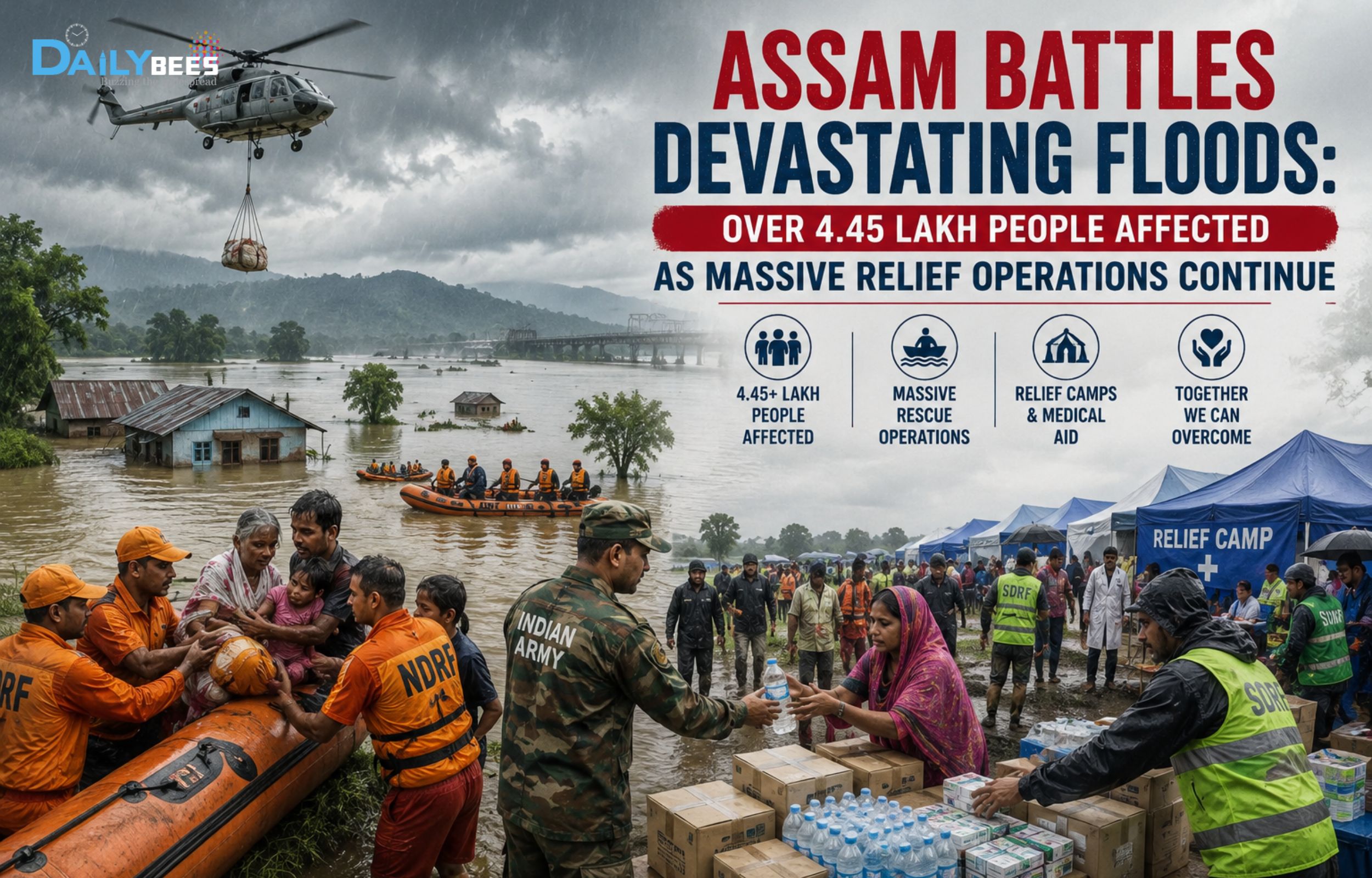
Assam is once again facing one of its worst flood emergencies in recent years as relentless monsoon rains and overflowing rivers have inundated vast parts of the state. More than 4.45 lakh people across several districts remain affected, prompting large-scale rescue and relief operations by the Central and State governments. The death toll from the Assam floods climbed to 75 on Tuesday as relentless monsoon rains continued to wreak havoc across the state. Rescue teams remain engaged in relief and evacuation efforts, while thousands of residents have been displaced by rising floodwaters.
The Brahmaputra River and several of its tributaries have been flowing above the danger mark following continuous rainfall in Assam and neighbouring states. The floodwaters have submerged villages, damaged homes, washed away roads, and forced thousands of families to leave their homes for safer locations.
Officials said that relief camps have been set up across the affected districts, where displaced residents are receiving food, drinking water, medical assistance, and temporary shelter. The National Disaster Response Force (NDRF), State Disaster Response Force (SDRF), Indian Army, and local administration are working together to rescue stranded people and deliver essential supplies to remote areas cut off by floodwaters.
Prime Minister Narendra Modi on Tuesday reviewed the flood situation in Assam and directed authorities to ensure that relief and rehabilitation efforts reach every affected family without delay. During the review meeting, the Centre assured full support to the Assam Government, including financial assistance, rescue personnel, and emergency supplies.
The latest flood has once again highlighted Assam’s annual struggle with monsoon disasters. Experts attribute the recurring floods to heavy rainfall, overflowing Himalayan rivers, erosion along the Brahmaputra, and changing climate patterns that have increased the frequency of extreme weather events.
Several districts in Upper Assam remain among the worst affected, with many villages completely surrounded by floodwaters. Transportation has been severely disrupted as roads and bridges remain submerged, making it difficult for rescue teams to reach isolated communities. Authorities are using boats and other specialised equipment to evacuate residents from inaccessible areas.
Thousands of hectares of paddy fields, vegetable farms, and tea plantations have been inundated, threatening the livelihoods of thousands of farmers. Livestock losses have also been reported as many animals were swept away by the rising waters.
Healthcare officials have deployed medical teams to relief camps to prevent outbreaks of waterborne diseases such as diarrhoea, cholera, and malaria, which often emerge after prolonged flooding. Clean drinking water, sanitation facilities, and vaccination drives have become major priorities for the administration.
Meanwhile, hundreds of social organisations, volunteers, and local residents have stepped forward to support flood victims. Relief materials, including food packets, drinking water, clothes, medicines, blankets, and hygiene kits, are being distributed across the affected districts. The humanitarian response from civil society has complemented government efforts and brought much-needed assistance to families in distress.
The floods have also impacted Assam’s wildlife. Rising water levels have forced several wild animals to leave their natural habitats in search of higher ground, increasing the risk of human-wildlife conflict. Forest officials continue to monitor wildlife movement and rescue stranded animals wherever possible.
In response to the recurring flood crisis, the Assam Government has announced a comprehensive ₹4,400 crore plan to strengthen Guwahati’s urban flood management system. The project will focus on improving drainage infrastructure, desilting drains, rejuvenating water bodies, and enhancing early warning systems to minimise flood damage in the future.
The All Assam Students’ Union (AASU) has also appealed to Prime Minister Narendra Modi to visit the flood-affected regions and announce a special relief package. The organisation has called for a scientific study into Assam’s recurring floods and urged the government to adopt permanent flood-control measures instead of relying solely on emergency relief every monsoon season.
Although weather forecasts indicate that rainfall may gradually ease in some areas, authorities remain on high alert as river levels continue to be monitored around the clock. Residents living in low-lying regions have been advised to follow official advisories and move to safer places whenever necessary.
As rescue operations continue, Assam’s resilience is once again on display. Government agencies, disaster response teams, volunteers, and local communities are working tirelessly to protect lives and provide relief to those affected. While immediate rescue efforts remain the priority, experts believe that sustainable river management, stronger embankments, climate-resilient infrastructure, and better disaster preparedness will be essential to reducing the impact of future floods.
The 2026 Assam floods serve as another stark reminder of the growing challenges posed by extreme weather events and the urgent need for long-term solutions that can protect both lives and livelihoods across the flood-prone state.