




























New Delhi | July 21, 2026
The Cockroach Janta Party’s (CJP) “Chalo Sansad” march from Jantar Mantar turned violent after protesters clashed with police, leading to lathi-charge, tear gas, and multiple detentions. Despite the crackdown, demonstrators resumed their sit-in and met Union Minister J.P. Nadda to press for Education Minister Dharmendra Pradhan’s resignation, education reforms, and compensation for affected students.
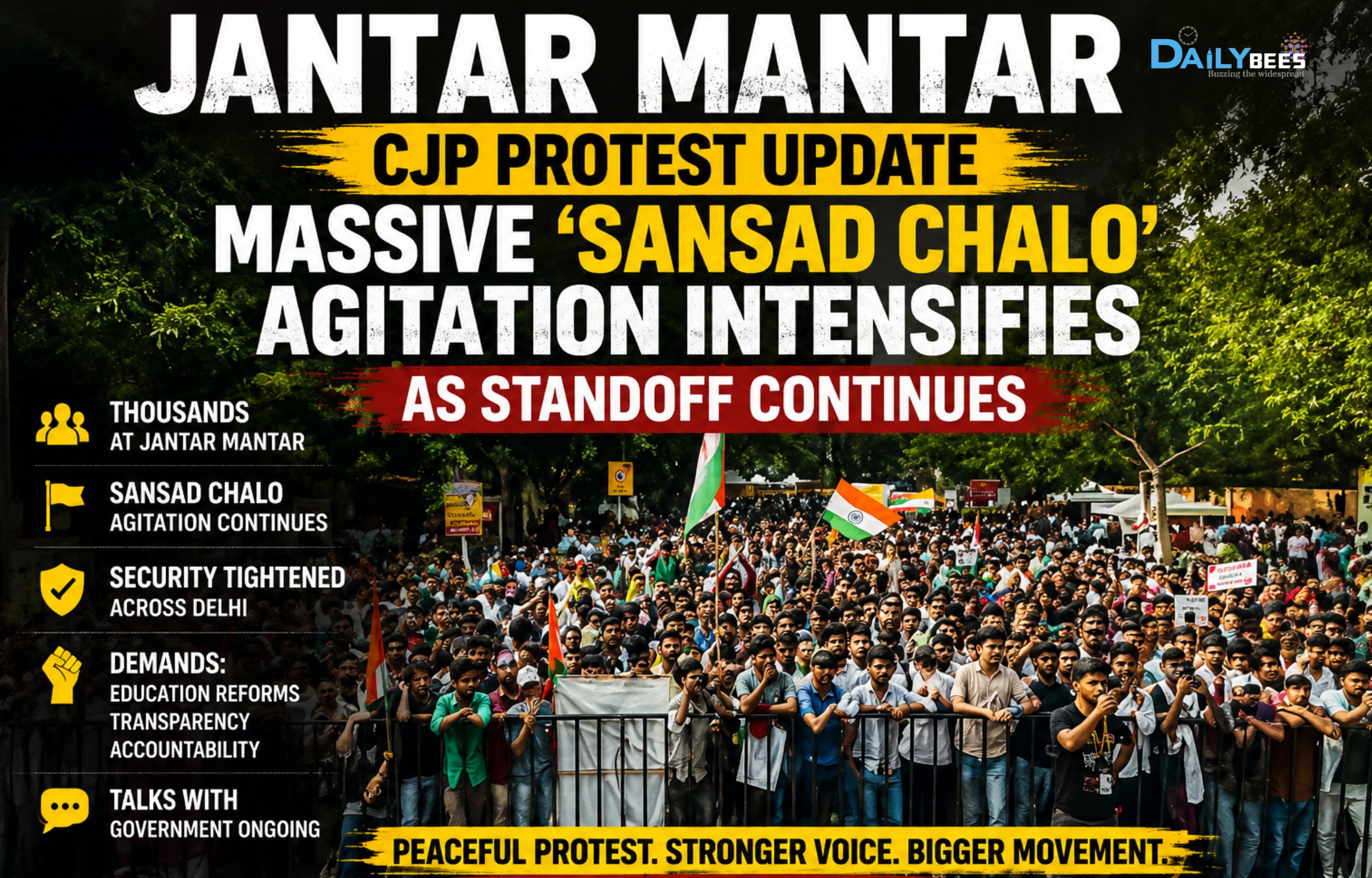
One of the biggest public demonstrations witnessed in the national capital in recent years entered a crucial phase on Tuesday as thousands of supporters of the Cockroach Janta Party (CJP) continued their protest at Jantar Mantar following Monday’s dramatic “Sansad Chalo” march. The movement, which began over alleged irregularities in competitive examinations, has now transformed into a nationwide campaign demanding accountability, education reforms, and greater transparency in public institutions.
The protest has dominated national headlines after violent clashes erupted between demonstrators and Delhi Police near the Parliament area. Police used barricades, tear gas, and baton charges to prevent protesters from marching towards Parliament, while protesters alleged excessive use of force. Videos from the protest spread rapidly across social media, making the agitation one of the most discussed topics across digital platforms.
Protest Continues at Jantar Mantar
Despite the confrontation, CJP leaders announced that their movement would continue peacefully from Jantar Mantar. Protesters remained at the site overnight, holding speeches, discussions, and candlelight gatherings while reiterating their commitment to non-violent demonstrations.
CJP founder Abhijeet Dipke continued his sit-in protest, stating that the movement would not be withdrawn until the government addresses its key demands. Organisers claimed participation from students, teachers, parents, civil society members, and professionals from across India.
Sonam Wangchuk’s Hunger Strike Draws National Attention
Environmental activist Sonam Wangchuk remains one of the most prominent faces associated with the protest. His prolonged hunger strike has become a powerful symbol for supporters of the movement.
Although he was shifted to Safdarjung Hospital after concerns over dehydration, Wangchuk reportedly refused treatment and reiterated his commitment to continue fasting until meaningful dialogue begins. His health has become a major concern among supporters and medical experts alike.
His participation has significantly expanded public attention beyond student groups, drawing support from environmental activists, education reform advocates, and several public personalities.
Police Register FIR After Violence
Delhi Police have registered an FIR following Monday’s violence, alleging incidents of stone-pelting and attacks on security personnel during the attempted march towards Parliament.
According to police officials, more than 170 people sustained injuries during the confrontation, including several police personnel. Authorities defended their crowd-control measures, stating that no permission had been granted for the Parliament march and that the protesters violated security restrictions around the high-security zone.
Protest leaders, however, rejected these allegations, accusing police of using disproportionate force against peaceful demonstrators.
Viral Videos Fuel Public Debate
Several videos circulating online have intensified the controversy.
One widely shared clip allegedly shows police personnel using force against protesters, while another appears to capture chaotic scenes as demonstrators attempted to cross security barricades. A video allegedly containing the phrase “Maaro sir” has sparked widespread criticism and renewed demands for an independent investigation into police conduct.
These visuals have dominated discussions across X, Instagram, YouTube, and Facebook, with hashtags related to the protest trending throughout the day.
Political Reactions Grow
The agitation has triggered strong political reactions across party lines.
Opposition leaders criticised the government’s handling of the protest and demanded protection of democratic rights, while the Centre maintained that law and order must be upheld and accused the organisers of politicising the issue.
Government representatives have stated that discussions remain possible through constitutional channels but defended the security measures imposed around Parliament during the Monsoon Session.
Security Tightened Across Delhi
The Delhi Police maintained heightened security across central Delhi throughout Tuesday.
Barricades remained in place around Parliament Street, Vijay Chowk, and adjoining roads, while additional security personnel were deployed to prevent further escalation. Several traffic diversions remained operational, and commuters experienced delays in parts of central Delhi.
Authorities said these arrangements would continue depending on the evolving situation.
Movement Expands Beyond Delhi
What started as a protest centred around examination-related grievances has now expanded into a broader national campaign.
Support demonstrations have reportedly been organised in multiple cities, with students and youth organisations expressing solidarity with the movement. Social media campaigns have further amplified participation, helping organisers mobilise supporters across different states.
Political analysts believe the movement’s ability to attract participants beyond traditional student organisations reflects growing public frustration over governance and institutional accountability.
Protesters’ Main Demands
The CJP leadership continues to press for several key demands, including:
- Greater transparency in public examinations.
- Accountability for alleged examination irregularities.
- Education system reforms.
- Action against those responsible for reported failures.
- Broader institutional accountability and governance reforms.
Organisers insist that the movement will remain peaceful and constitutional while pursuing these objectives.
Government Maintains Its Position
Government officials have reiterated that public protests are permitted only within the framework of existing laws and security protocols.
Authorities have maintained that permission was neither sought nor granted for the Parliament march and that police acted only after protesters attempted to enter restricted areas around Parliament during the Monsoon Session.
At the same time, reports indicate that government representatives have initiated discussions with members of the movement in an effort to reduce tensions.
What Happens Next?
As Tuesday draws to a close, the protest at Jantar Mantar shows no signs of ending. Organisers have announced that the sit-in will continue while they evaluate their next course of action. Protesters remain determined to sustain pressure through peaceful demonstrations, whereas authorities continue to monitor the situation closely.
The coming days are expected to be critical. Whether negotiations lead to a breakthrough or further demonstrations unfold across the country may determine the future direction of what has become one of India’s most closely watched public movements of 2026.