



























India is a land parcel of miscellaneous cultures, traditions, and festivals, and Dussehra is one of the most significant celebrations in the Hindu calendar. Also known as Vijayadashami, the festival symbolizes the victory of good over evil, righteousness over wrongdoing, and truth over falsehood.
Celebrated at the end of Navratri, Dussehra brings communities together through religious ceremonies, cultural performances, processions, and vibrant festivities.
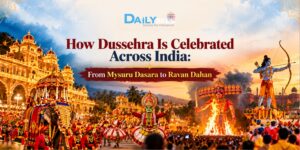
However, how Dussehra is celebrated all over the nation, varies significantly from one state to another. In Karnataka, Mysuru Dasara is famous for its royal grandeur and magnificent procession.
In Delhi and other parts of North India, towering effigies of Ravana are burned to celebrate Lord Rama’s victory. In West Bengal, Vijayadashami marks the emotional farewell to Goddess Durga, while Himachal Pradesh celebrates Kullu Dussehra with distinctive local customs.
These regional differences make Dussehra more than a religious festival. They reflect India’s rich cultural heritage and the many ways people express their faith, devotion, and joy.
Why is Dussehra Celebrated in India?
Dussehra is related with two important stories from Hindu tradition. Both highlight the triumph of good over evil and the importance of bravery, truth, & honesty.
The Story of Lord Rama and Ravana
As per Hindu epic Ramayana, Lord Rama fought Ravana, the powerful king of Lanka, to rescue his wife, Goddess Sita. With the support of his brother Lakshmana, Hanuman, and the Vanara army, Rama defeated Ravana after a fierce battle.
The victory is commemorated on Dussehra through Ravan Dahan, a ritual in which effigies of Ravana are burned, often alongside those of Meghnad and Kumbhkaran. The burning represents the destruction of arrogance, greed, injustice, and negative tendencies.
The Victory of Goddess Durga Over Mahishasura
In another important tradition, Dussehra celebrates Goddess Durga’s victory over Mahishasura, a powerful demon who threatened the world. After a battle lasting nine days and nights, Goddess Durga defeated him, restoring peace and balance.
This story is especially significant in eastern India, where Durga Puja is celebrated with great enthusiasm. The tenth day, Vijayadashami, marks the goddess’s victory and her ceremonial farewell.
How Dussehra Is Celebrated Across India
-
Mysuru Dasara, Karnataka — The Royal Celebration
Mysuru Dasara is among India’s most famous Dussehra celebrations. The festival is known for its royal heritage, illuminated Mysore Palace, cultural programs, and grand procession called the Jamboo Savari.
The city is decorated with lights, and the palace becomes a major attraction for visitors. The procession traditionally features decorated elephants, music, folk performances, and a ceremonial display associated with the region’s royal traditions.
Mysuru Dasara combines various religious devotion with Karnataka’s history, art, and cultural identity, attracting visitors from across India and abroad.
-
Ravan Dahan in Delhi and North India
In Delhi, Uttar Pradesh, Haryana, and several other northern states, Dussehra is widely associated with Ravan Dahan.
Large effigies of Ravana are erected in open grounds, and people gather to watch them burn during evening celebrations. Fireworks, festive stalls, and cultural performances add to the atmosphere.
Ramlila performances are another major attraction. These theatrical productions narrate episodes from the Ramayana, culminating in the battle between Lord Rama and Ravana. The tradition helps pass religious stories and moral lessons from one generation to the next.
-
Kullu Dussehra, Himachal Pradesh — A Unique Tradition
Kullu Dussehra is distinctive because its main celebrations begin on Vijayadashami and continue for several days, unlike many regions where festivities conclude on the tenth day.
The festival brings together local deities from surrounding villages, who are carried in decorated palanquins to participate in ceremonial gatherings. The celebrations centre on Lord Raghunath, the presiding deity of the festival.
Traditional music, folk dances, religious processions, and community gatherings make Kullu Dussehra a remarkable example of Himachal Pradesh’s living cultural traditions.
-
Vijayadashami in West Bengal — Durga Visarjan
In West Bengal, Dussehra coincides with Vijayadashami, the concluding day of Durga Puja.
After several days of worship, elaborate pandals, and cultural celebrations, devotees bid farewell to Goddess Durga through Durga Visarjan, the immersion of her idol in water. Sindoor Khela, a ritual traditionally observed by married women in many communities, is also associated with the occasion.
The farewell is emotional yet celebratory, expressing the belief that the goddess returns to her heavenly abode after visiting her devotees.
-
Bastar Dussehra, Chhattisgarh — Tribal Traditions
Bastar Dussehra is one of India’s most distinctive regional festivals. Celebrated in Chhattisgarh, it is deeply rooted in local tribal traditions and devotion to Goddess Danteshwari.
Unlike the Dussehra celebrations centred on Ravana’s defeat, Bastar Dussehra focuses primarily on the goddess and local customs. Its celebrations include elaborate chariot processions, community rituals, and the participation of tribal groups from the region.
The festival extends over many weeks, making it a powerful expression of Bastar’s cultural identity and collective heritage.
-
Dussehra in Maharashtra — Apta Leaves and Rituals
In Maharashtra, Dussehra is associated with auspicious beginnings, prosperity, and the exchange of Apta leaves.
These leaves are symbolically treated as gold, and friends and relatives exchange them as a gesture of goodwill and prosperity. Families also perform prayers and visit one another to share festive greetings.
In some communities, people worship tools, vehicles, books, or work equipment, expressing gratitude for their livelihoods and seeking blessings for future success.
-
Vijayadashami in Tamil Nadu — Worship and New Beginnings
In Tamil Nadu, Vijayadashami is an auspicious day for learning and new beginnings.
Many families celebrate the completion of Navratri with prayers and rituals associated with Goddess Saraswati, the deity of knowledge, music, and learning. Children may begin their formal education through the traditional ceremony of Vidyarambham, in which they are introduced to writing.
The festival is also connected with Ayudha Puja, during which tools, instruments, books, and work equipment are honoured. These traditions highlight the importance of education, skill, and dedication.
-
Dussehra and Navratri Celebrations in Gujarat
In Gujarat, the nine nights of Navratri are celebrated with energetic Garba and Dandiya Raas performances. People gather in traditional attire to dance in circles around a central shrine or image of the goddess.
The tenth day, Dussehra or Vijayadashami, marks the conclusion of Navratri and celebrates the triumph of good over evil.
While the scale and customs vary by community, Gujarat’s festive atmosphere reflects the region’s strong devotion to Goddess Durga and its vibrant folk traditions.
Major Dussehra Rituals and Traditions Across India
Ravana Effigy Burning and Its Significance
Ravan Dahan is one of the best-known Dussehra traditions. The burning of Ravana’s effigy symbolises the destruction of evil and reminds people that pride, greed, and injustice ultimately lead to downfall.
The ritual also encourages individuals to overcome negative qualities within themselves.
Ramlila Performances
Ramlila is a traditional theatrical representation of Lord Rama’s life and the events described in the Ramayana. Performances may take place over several days, with the final scenes depicting Rama’s victory over Ravana.
These productions combine storytelling, music, dialogue, and dramatic performances to share cultural and moral values.
Dussehra Puja and Vijayadashami Rituals
Many families perform prayers, visit temples, and seek blessings for prosperity and success. Depending on regional customs, people may worship weapons, tools, books, vehicles, or other objects connected with their work.
Vijayadashami is also considered an auspicious occasion for starting educational, professional, or personal endeavours.
How Dussehra Celebrations Differ Across Indian States
- Karnataka: Royal processions, palace illuminations, and cultural performances.
- Delhi and North India: Ravan Dahan and dramatic Ramlila performances.
- Himachal Pradesh: Community gatherings and deity processions during Kullu Dussehra.
- West Bengal: Durga Puja celebrations culminating in Durga Visarjan.
- Chhattisgarh: Tribal traditions and devotion to Goddess Danteshwari during Bastar Dussehra.
- Maharashtra: Apta leaf exchanges and prayers for prosperity.
- Tamil Nadu: Worship of knowledge and tools, alongside educational beginnings.
- Gujarat: Navratri Garba and Dandiya celebrations followed by Vijayadashami.
These differences demonstrate how India’s regional traditions give a shared festival many distinct cultural expressions.
The Cultural and Religious Significance of Dussehra
Dussehra carries lessons that extend beyond religious observances. Its stories encourage people to choose honesty over deception, humility over arrogance, and justice over wrongdoing.
The festival also strengthens family and community relationships. People come together for prayers, performances, processions, and festive meals, creating opportunities to share traditions and celebrate their cultural roots.
Frequently Asked Questions About Dussehra
How is Dussehra celebrated in different states of India?
Dussehra is celebrated through regional traditions, including Mysuru’s royal procession, Ravan Dahan in North India, Durga Visarjan in West Bengal, tribal rituals in Bastar, and the exchange of Apta leaves in Maharashtra.
Why is Ravana burned on Dussehra?
Ravana’s effigy is burned to commemorate Lord Rama’s victory over Ravana and symbolise the triumph of good over evil. The ritual also reminds people to overcome arrogance, greed, and other negative qualities.
Which place is famous for Dussehra celebrations in India?
Mysuru in Karnataka is especially famous for its grand royal Dasara celebrations. Other notable destinations include Kullu in Himachal Pradesh, Bastar in Chhattisgarh, and Delhi for its Ravan Dahan events.
What is the difference between Dussehra and Vijayadashami?
Dussehra and Vijayadashami generally refer to the same festival, celebrated on the tenth day of the Ashwin lunar fortnight. The name Dussehra is commonly associated with Lord Rama’s victory over Ravana, while Vijayadashami emphasises victory and is also linked to Goddess Durga’s triumph over Mahishasura. Regional interpretations and celebrations vary.
Conclusion: One Festival, Many Traditions
Understanding how Dussehra is celebrated across India reveals the country’s remarkable cultural diversity and shared spiritual values. From Mysuru Dasara’s royal grandeur and North India’s dramatic Ravan Dahan to West Bengal’s Durga Visarjan and Bastar’s tribal traditions, every region brings its own meaning and customs to the festival.
One festival, many traditions, and a timeless message of hope make Dussehra a cherished part of India’s cultural and religious heritage.