



























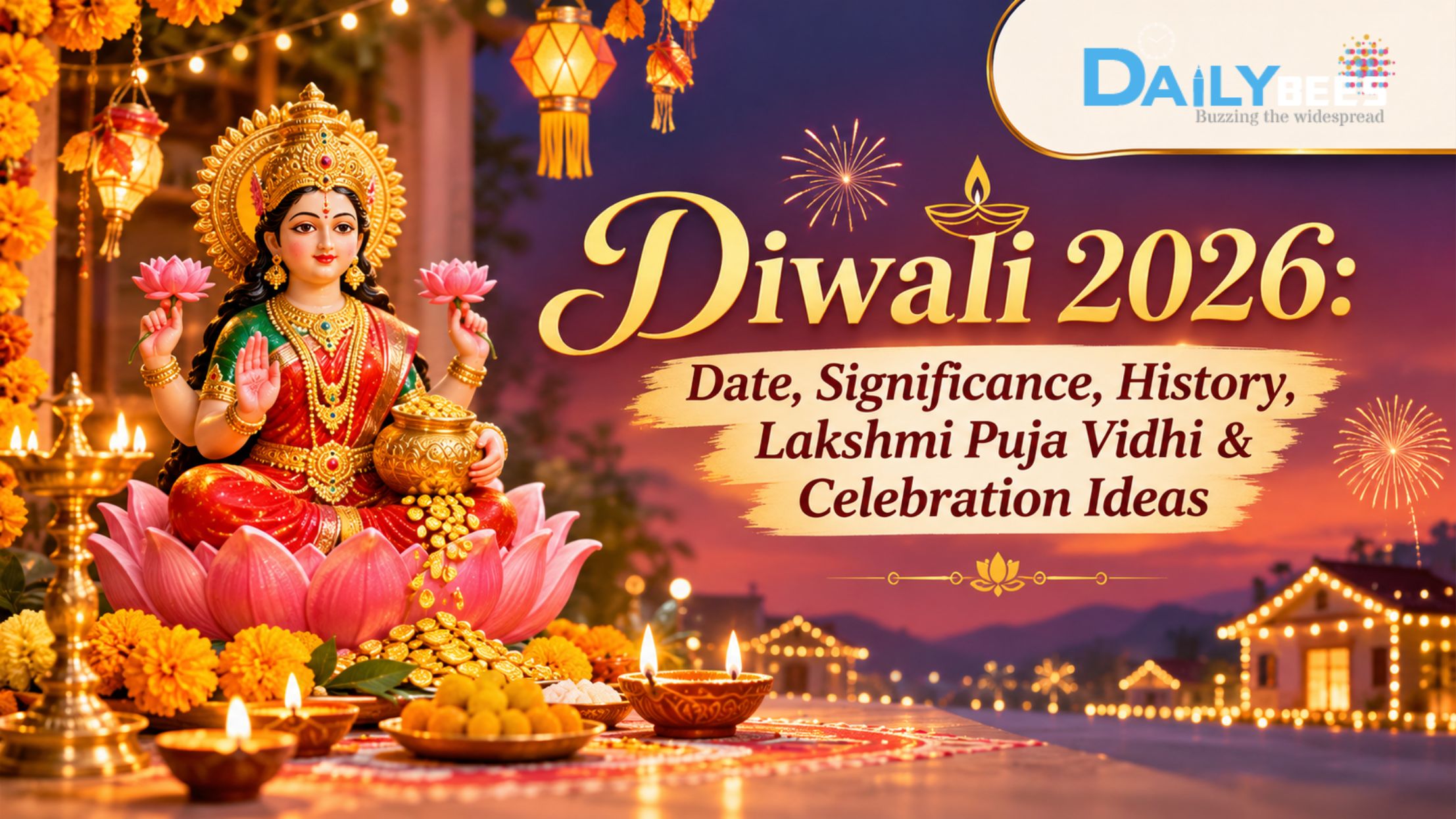
Diwali, popularly known as the Festival of Lights, is one of the most celebrated festivals in India. Symbolising the victory of good over evil, light over darkness, and knowledge over ignorance, Diwali brings families and communities together through prayers, traditional decorations, delicious sweets, and joyful celebrations.
Diwali 2026 will be celebrated on Sunday, 8 November 2026. The festival holds deep religious, cultural, and spiritual significance, particularly for Hindus, Jains, and Sikhs. Homes and streets come alive with colourful rangolis, glowing diyas, decorative lights, and festive enthusiasm.
Whether you are planning your Lakshmi Puja, exploring the history of Diwali, or looking for creative celebration ideas, here is everything you need to know about Diwali 2026.
When Is Diwali Celebrated in 2026?
Diwali 2026 falls on Sunday, 8 November 2026, according to the Hindu lunar calendar. It is traditionally celebrated on Amavasya (the new moon day) during the Hindu month of Kartik.
The main Lakshmi Puja is performed in the evening during the auspicious Pradosh Kaal. Families worship Goddess Lakshmi, Lord Ganesha, and seek blessings for prosperity, happiness, and success.
Diwali 2026: Important Details
- Festival: Diwali (Deepavali)
- Date: Sunday, 8 November 2026
- Hindu Month: Kartik
- Tithi: Kartik Amavasya
- Main Ritual: Lakshmi-Ganesh Puja
- Significance: Victory of good over evil and light over darkness
For New Delhi, the indicative Lakshmi Puja Muhurat is 5:54 PM to 7:50 PM. Puja timings may vary by location, so check your local Panchang before performing the rituals.
What Is Diwali and Why Is It Celebrated?
The word Deepavali originates from Sanskrit, meaning a row or series of lights. The festival represents the triumph of righteousness, hope, positivity, and spiritual awakening.
Diwali is celebrated for several religious and historical reasons. For many Hindus, it marks Lord Rama’s return to Ayodhya after defeating Ravana and completing 14 years of exile. People welcomed him by lighting rows of earthen lamps.
The festival is also associated with Goddess Lakshmi, the Hindu goddess of wealth, prosperity, and fortune. Devotees worship her to invite happiness, financial stability, and abundance into their homes.
For Jains, Diwali marks the nirvana of Lord Mahavira, while Sikhs celebrate Bandi Chhor Divas, commemorating Guru Hargobind Sahib’s release from imprisonment.
Although traditions differ across communities, the central message remains the same: goodness, compassion, hope, and new beginnings.
The History and Mythological Stories Behind Diwali
The history of Diwali is connected with several fascinating mythological stories and religious traditions.
Lord Rama’s Return to Ayodhya
One of the most popular stories associated with Diwali comes from the Hindu epic Ramayana.
According to the legend, Lord Rama, accompanied by Goddess Sita and his brother Lakshmana, returned to Ayodhya after 14 years of exile. During this period, Lord Rama defeated the demon king Ravana and rescued Sita.
To celebrate their return, the people of Ayodhya decorated the kingdom with flowers and illuminated their homes with earthen lamps. This tradition eventually became associated with the annual celebration of Diwali.
Goddess Lakshmi and Diwali
Another important belief connects Diwali with the birth or emergence of Goddess Lakshmi during the Samudra Manthan, the legendary churning of the cosmic ocean by gods and demons.
Goddess Lakshmi emerged from the ocean carrying blessings of wealth, prosperity, and abundance. Therefore, devotees worship her on Diwali to invite good fortune and financial well-being.
Other Regional Stories Associated with Diwali
Different regions of India celebrate Diwali through their own religious traditions.
- Lord Krishna and Narakasura: In several parts of India, Diwali celebrations are associated with Lord Krishna’s victory over the demon Narakasura.
- King Bali: In some traditions, Govardhan Puja and Bali Pratipada commemorate the legendary King Bali.
- Lord Mahavira: For Jains, Diwali marks the attainment of nirvana by Lord Mahavira.
- Guru Hargobind Sahib: Sikhs celebrate Bandi Chhor Divas to remember the release of Guru Hargobind Sahib and other prisoners.
Spiritual Significance of Diwali
The Diwali significance goes beyond decorations, shopping, and celebrations. It encourages people to reflect on their thoughts, actions, and relationships.
The lighting of diyas represents removing negativity and welcoming positivity into life. Cleaning and decorating homes symbolise fresh beginnings, while performing prayers encourages gratitude and spiritual awareness.
Diwali also reminds people to:
- Choose truth and righteousness over dishonesty.
- Spread kindness, compassion, and happiness.
- Forgive others and strengthen relationships.
- Share food and resources with those in need.
- Welcome positive changes and new opportunities.
- Practise gratitude and appreciate life’s blessings.
Ultimately, Diwali is a reminder that even the smallest light can brighten the darkest surroundings.
Lakshmi Puja Vidhi and Rituals
Lakshmi Puja is one of the most important rituals of Diwali. Families perform the puja to seek blessings from Goddess Lakshmi and Lord Ganesha.
Here is a simple Diwali Lakshmi Puja Vidhi:
- Clean and Decorate Your Home
Clean your home thoroughly before Diwali. Decorate the entrance with rangoli, flowers, torans, and decorative lights.
- Prepare the Puja Area
Place idols or pictures of Goddess Lakshmi and Lord Ganesha on a clean platform. Arrange flowers, fruits, sweets, incense sticks, diyas, and other puja essentials.
- Perform Ganesh Puja
Begin the ceremony by worshipping Lord Ganesha, who is traditionally invoked before starting auspicious activities.
- Worship Goddess Lakshmi
Offer flowers, sweets, fruits, kumkum, turmeric, and other traditional offerings to Goddess Lakshmi. Chant Lakshmi mantras and perform the puja according to family traditions.
- Light Diyas
Light earthen lamps around the home, especially near the entrance, balconies, and puja area.
- Perform Aarti
Conclude the puja by performing Lakshmi and Ganesh Aarti with family members.
- Distribute Prasad
Share the prepared sweets and prasad with family, friends, and neighbours.
Note: Rituals and auspicious timings may differ according to regional customs and family traditions.
How Is Diwali Celebrated in Different Parts of India?
Diwali traditions in India are wonderfully diverse.
- North India: Families celebrate Lord Rama’s return to Ayodhya with diyas, fireworks, Lakshmi Puja, sweets, and family gatherings.
- Gujarat: Diwali is associated with prosperity, business worship, and the beginning of a new financial year for many communities.
- Maharashtra: Celebrations include traditional faral snacks, decorative lamps, and family gatherings.
- West Bengal: Kali Puja is an important part of Diwali celebrations, with devotees worshipping Goddess Kali.
- South India: Naraka Chaturdashi is particularly significant, with early morning oil baths, traditional food, and prayers.
- Punjab: Sikhs celebrate Bandi Chhor Divas with illuminated gurdwaras, prayers, and community gatherings.
These regional traditions highlight India’s cultural diversity and the shared spirit of celebration.
Traditional Diwali Decorations and Rangoli Ideas
Decorating homes is one of the most exciting parts of Diwali. Beautiful decorations create a welcoming atmosphere and add festive charm.
Some popular Diwali decoration ideas include:
- Rangoli Designs: Create colourful rangolis using flowers, rice powder, or coloured powders.
- Earthen Diyas: Decorate traditional clay lamps with paint, glitter, and floral patterns.
- Fairy Lights: Illuminate balconies, windows, gardens, and entrances.
- Flower Decorations: Use marigold and rose flowers to decorate doors and puja spaces.
- Decorative Torans: Hang traditional door hangings made from flowers, beads, or fabric.
- Candles and Lanterns: Add decorative lanterns and candles to create a warm festive atmosphere.
Traditional decorations combined with modern lighting can make your home look beautiful and welcoming.
Delicious Traditional Diwali Foods and Sweets
No Diwali celebration is complete without delicious food and traditional Indian sweets. Families prepare special dishes and exchange homemade treats with friends and relatives.
Some popular Diwali delicacies include:
- Gulab Jamun: Soft, syrup-soaked milk-based sweets.
- Kaju Katli: A popular cashew-based sweet.
- Laddoo: Traditional sweets prepared using besan, boondi, or other ingredients.
- Gujiya: A sweet pastry filled with khoya and dry fruits.
- Chakli: A crunchy, savoury spiral snack.
- Mathri: A crispy traditional snack enjoyed with tea.
- Shakkarpare: Sweet, crunchy bites prepared with flour and sugar.
Preparing sweets together, sharing festive gift boxes, and enjoying family meals make Diwali even more memorable.
Eco-Friendly Ways to Celebrate Diwali
While celebrating Diwali, it is equally important to protect the environment and promote responsible festivities.
Here are some simple ways to enjoy an eco-friendly Diwali:
- Choose traditional clay diyas instead of excessive plastic decorations.
- Avoid noisy and polluting firecrackers.
- Use LED lights to save electricity.
- Decorate your home with natural flowers and reusable materials.
- Prepare homemade sweets instead of relying entirely on packaged products.
- Donate clothes, food, and essentials to underprivileged families.
- Avoid single-use plastic during festive shopping and celebrations.
A sustainable Diwali ensures that happiness and positivity extend beyond our homes to the environment and society.
Best Diwali Wishes and Messages to Share
Share the happiness of Diwali 2026 with your loved ones through warm wishes and thoughtful messages.
- Traditional Diwali Wish
May Goddess Lakshmi bless your home with wealth, prosperity, and happiness. Wishing you and your family a very Happy Diwali 2026!
- Inspirational Diwali Message
May the light of Diwali remove all darkness from your life and fill your heart with hope, positivity, and success. Happy Diwali!
- Family Diwali Wish
May this beautiful festival bring endless smiles, good health, love, and togetherness to your family. Have a wonderful and blessed Diwali!
- Professional Diwali Greeting
Wishing you a prosperous and successful Diwali. May the festival bring new opportunities, achievements, and happiness to you and your loved ones.
Frequently Asked Questions About Diwali
- When is Diwali in 2026?
Diwali 2026 will be celebrated on Sunday, 8 November 2026, on Kartik Amavasya.
- Why is Diwali called the Festival of Lights?
Diwali is called the Festival of Lights because people illuminate their homes with candles, diyas and decorative lights, symbolising the victory of light over extreme darkness.
- Why do we worship Goddess Lakshmi on Diwali?
Goddess Lakshmi is worshipped as the goddess of wealth, prosperity, and good fortune. Devotees seek her blessings for happiness and abundance.
- What is the significance of lighting diyas on Diwali?
Lighting diyas symbolizes hope, knowledge, positivity, and the elimination of darkness and negativity from life.
- What are the main traditions of Diwali?
Some popular traditions include cleaning and decorating homes, making rangolis, performing Lakshmi-Ganesh Puja, lighting diyas, exchanging gifts, preparing sweets, and spending time with family.
- How can I celebrate an eco-friendly Diwali?
You can celebrate an eco-friendly Diwali by using clay diyas, LED lights, natural decorations, avoiding polluting firecrackers, and donating to people in need.
Conclusion
Diwali 2026 is an opportunity to celebrate happiness, strengthen relationships, embrace traditions, and welcome new beginnings. Beyond its colourful decorations, delicious sweets, and festive gatherings, the festival carries a timeless message of hope, kindness, and the victory of good over evil.
Whether you celebrate by performing Lakshmi Puja, decorating your home with beautiful rangolis, sharing sweets, or helping someone in need, make this Diwali meaningful and memorable.
May the divine light of Diwali illuminate your life with peace, prosperity, good health, and endless happiness. Wishing everyone a very Happy Diwali 2026!