


























The First Spoonful Can Be the Beginning of a Healthy Journey
Few parenting moments are as memorable as watching a baby taste solid food for the first time. There may be curiosity, excitement, a funny expression—and sometimes, an immediate refusal!
For parents, however, those first bites bring an important responsibility: how can we make early meals both nutritious and enjoyable?
The first two years are a period of rapid growth and development. During this time, children gradually move from milk feeds to a varied diet of complementary foods and, eventually, modified family meals. This transition is not about filling a tiny tummy with as much food as possible. It is about introducing wholesome nutrition, appropriate textures and positive eating experiences.
And healthy baby food does not need to be complicated. Everyday vegetarian ingredients such as fruits, vegetables, grains, pulses and suitable dairy foods can be transformed into simple, nourishing meals.
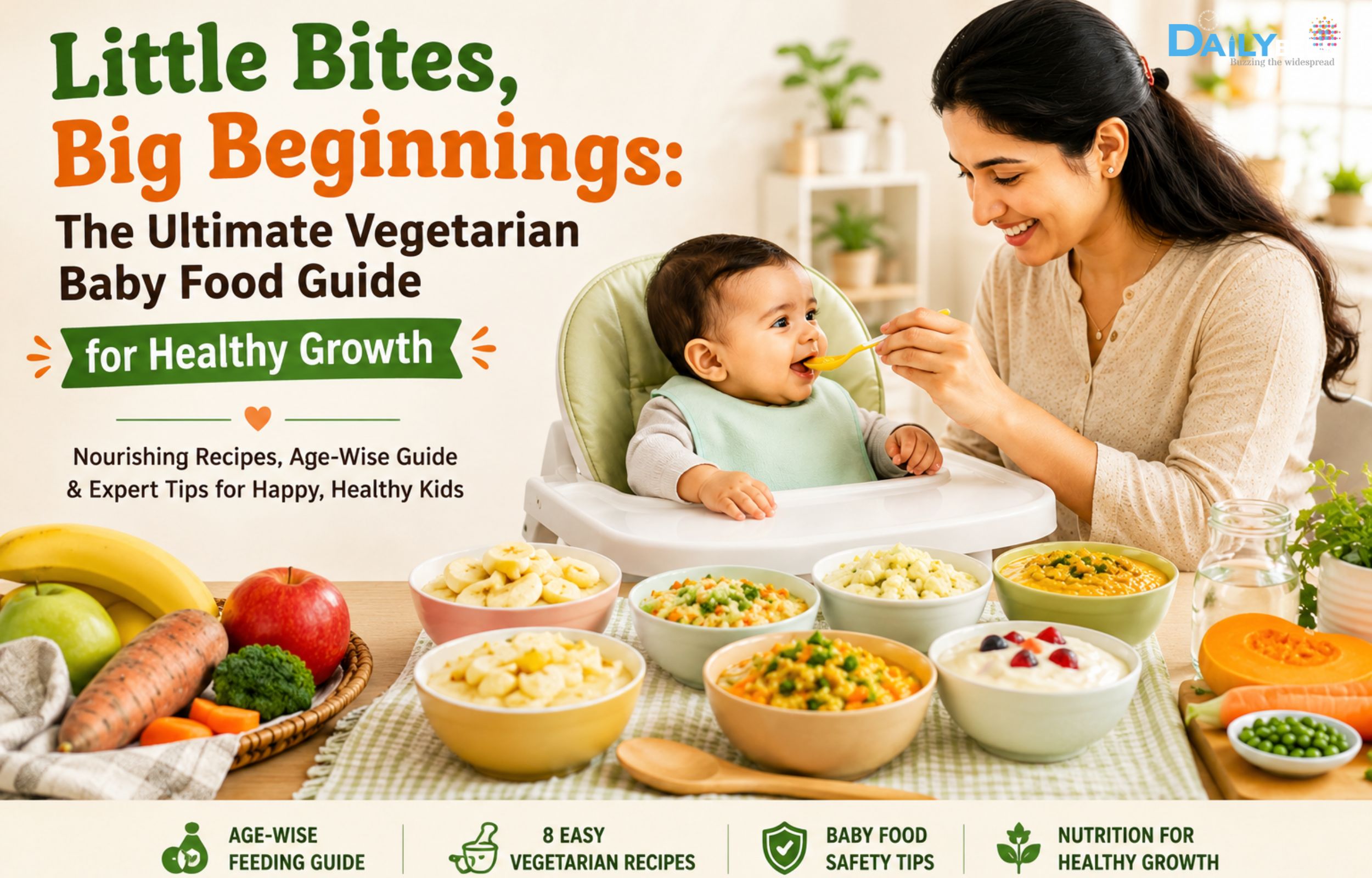
Here is an easy age-wise roadmap to make your little one’s food journey healthier and happier.
Why Nutrition Matters in the Early Years
Growing bodies need a wide range of nutrients. Protein, iron, calcium, healthy fats, vitamins, minerals and fibre all contribute to a child’s growth and development.
A varied diet can help provide nutrients needed for healthy bones, muscles, brain development and normal immune function. Just as importantly, early exposure to different flavours and textures can help children become comfortable with a wider variety of nutritious foods.
During the first year, breast milk or infant formula remains an important source of nutrition while complementary foods are introduced at around six months when the baby is developmentally ready.
The golden rule? Think variety, balance and age-appropriate preparation—not perfection.
From First Tastes to Family Foods: An Age-Wise Guide
6–8 Months, Start Small, Keep It Soft
At this stage, food is a new adventure. Begin with small amounts and gradually introduce different foods.
What Can Be Offered?
Soft mashed fruits, cooked vegetables, oatmeal, rice, well-cooked pulses and other suitable vegetarian foods can be introduced in smooth or mashed textures.
As the baby becomes comfortable, gradually progress towards thicker and lumpier textures rather than keeping everything completely smooth.
Simple meal idea: Mashed moong dal and rice with a little well-cooked vegetable.
Remember: Follow your baby’s developmental readiness and never force-feed.
9–12 Months, Let Them Explore
Your baby may now be ready for more variety and texture. Mealtimes can become an opportunity to explore new tastes and develop eating skills.
What Can Be Offered?
Soft fruits and vegetables, well-cooked pulses, grains, pasteurised plain yogurt and other appropriate vegetarian foods can be included.
Soft finger foods may encourage babies to practise feeding themselves, but close supervision is essential.
Simple meal idea: Soft vegetable khichdi, mashed sweet potato or plain yogurt with soft mashed fruit.
1–2 Years, Welcome to the Family Table
Toddlers can gradually enjoy many nutritious family foods, prepared in textures that are safe and easy for them to manage.
Offer a variety of vegetables, fruits, whole grains, pulses and suitable dairy foods. Keep added sugar and highly processed foods to a minimum.
At this stage, the goal is not simply to make a child eat—it is to help them develop a positive relationship with food.
8 Easy Vegetarian Recipes for Growing Little Tummies
1. Banana-Oat Breakfast Mash
Ingredients: Ripe banana and well-cooked oats.
Method: Cook oats until soft. Mash the banana and combine it with the cooled oats.
Nutrition Benefit: Oats provide energy and fibre, while banana contributes nutrients and natural sweetness.
2. Wholesome Vegetable Khichdi
Ingredients: Rice, moong dal, carrot, pumpkin and peas.
Method: Cook all ingredients together until very soft. Mash or adjust the texture according to the child’s age and feeding skills.
Nutrition Benefit: A comforting combination of grains, plant-based protein and vegetables.
3. Creamy Sweet Potato Mash
Ingredients: Cooked sweet potato and a suitable liquid, if needed for consistency.
Method: Cook the sweet potato until completely tender and mash until smooth.
Nutrition Benefit: Sweet potato provides carbohydrates, fibre and several important micronutrients.
4. Apple & Oatmeal Bowl
Ingredients: Oats and peeled, cooked apple.
Method: Cook both until soft. Mash the apple and mix it with the oatmeal.
Nutrition Benefit: A simple, naturally sweet meal that provides energy and fibre.
5. Moong Dal Vegetable Soup
Ingredients: Moong dal, carrot, pumpkin and water.
Method: Cook until everything becomes very soft. Mash or blend according to the child’s developmental stage.
Nutrition Benefit: Provides plant-based protein along with nutrients from vegetables.
6. Soft Paneer & Vegetable Mash
Ingredients: Soft, pasteurised paneer and thoroughly cooked vegetables.
Method: Finely crumble the paneer and combine it with mashed vegetables.
Nutrition Benefit: Paneer can contribute protein and calcium, while vegetables provide a variety of micronutrients.
7. Yogurt & Fruit Delight
Ingredients: Plain, unsweetened, pasteurised yogurt and soft mashed fruit.
Method: Combine the yogurt and fruit and serve in an age-appropriate texture.
Nutrition Benefit: Yogurt contributes protein and calcium, while fruit adds flavour and nutrients.
8. Nourishing Vegetable Dalia
Ingredients: Dalia, carrot, pumpkin and peas.
Method: Cook thoroughly until soft. Mash for younger children or serve in a suitable soft texture for toddlers.
Nutrition Benefit: Dalia provides energy and fibre, while vegetables add variety and essential nutrients.
Baby Food Safety: What Parents Should Remember
A nutritious meal is only beneficial when it is prepared and served safely.
Do not give honey before 12 months. Avoid foods that can present choking hazards, including whole nuts, whole grapes, hard raw vegetables and other hard or round foods unless they are prepared in a safe, age-appropriate manner.
Avoid unpasteurised dairy products and foods that may carry a higher risk of foodborne illness. Foods and drinks containing added sugars should also be limited.
When introducing potentially allergenic foods, parents should follow appropriate medical guidance, especially if their child has known risk factors.
Always supervise babies and young toddlers while they are eating.
When Your Little One Becomes a “Food Critic”
“Not today!” says the toddler who happily ate the same food yesterday.
Sound familiar?
Fussy eating can be challenging, but mealtimes do not have to become a daily struggle. Offer small portions, pair unfamiliar foods with familiar favourites and give children opportunities to explore food without pressure.
If a child refuses something, try offering it again on another occasion. Avoid forcing, bribing or turning food into a battle.
Patience is often the most important ingredient in a parent’s kitchen.
Children also learn by watching. When they see parents enjoying fruits, vegetables and wholesome meals, healthy eating becomes part of everyday family life rather than a special rule.
Nourishment Is More Than What Is on the Plate
A healthy childhood is built through countless small moments—a colourful bowl of vegetables, a spoonful of nourishing dal, a new fruit tasted for the first time and a relaxed family meal around the table.
Parents do not need to create elaborate recipes every day. Simple, wholesome and varied foods can make a meaningful difference.
Every child is unique and develops at their own pace. Follow your child’s developmental readiness and consult a paediatrician or qualified healthcare professional for personalised guidance about feeding, allergies, growth or nutrition.
Because healthy eating is not created in a single meal.
“It is nurtured—one wholesome bite, one new flavour and one loving mealtime at a time.”
Save, Share & Inspire
Save this guide for your next meal-planning session and share it with another parent who is beginning the exciting journey of complementary feeding.
And if your little one has a favourite healthy vegetarian recipe, share it—you never know which simple family favourite might become another parent’s mealtime lifesaver.